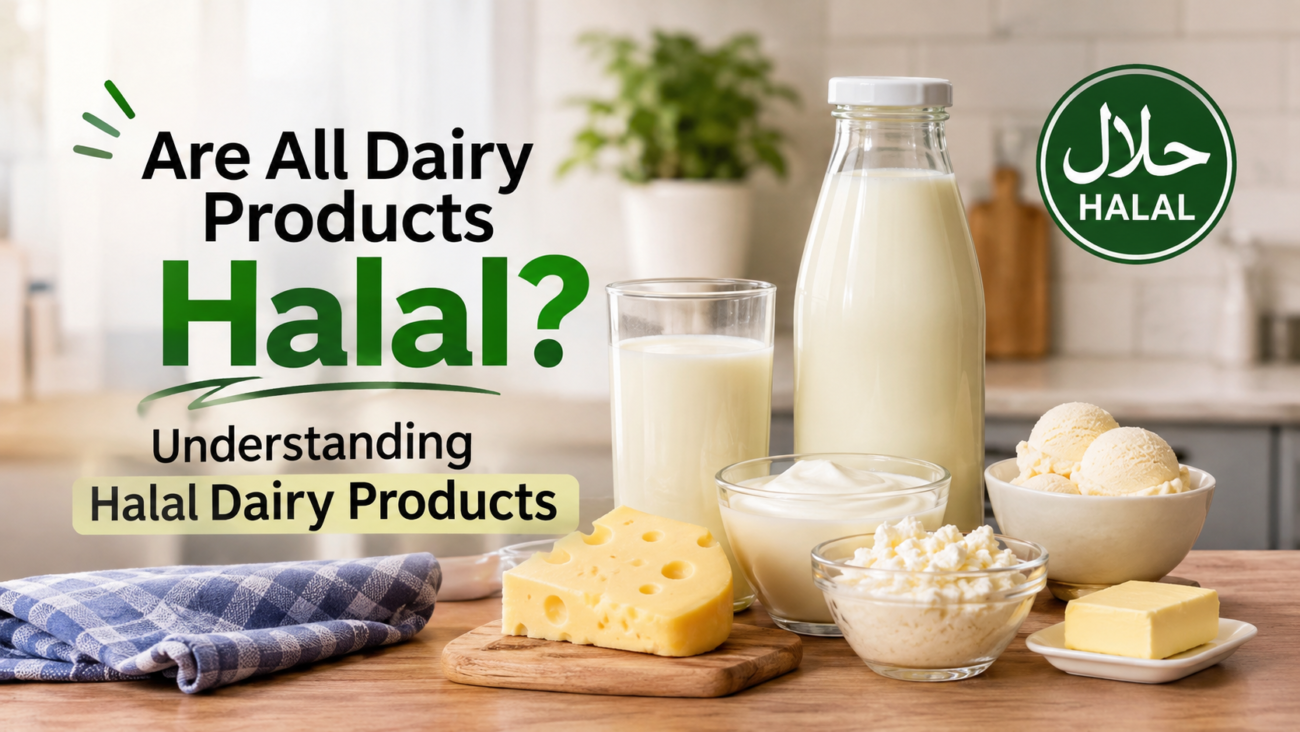
Milk, cheese, butter, yoghurt and ice cream are products that many of us consume regularly. We often pick them up from supermarket shelves without thinking much about how they are made. But for consumers who follow Halal dietary guidelines, an important question is worth asking: Are all dairy products Halal?
The answer depends on more than just the main ingredient. While natural milk is generally considered permissible, some processed products may involve additional ingredients and manufacturing methods that need attention. Understanding Halal dairy products can help consumers make choices that better match their dietary preferences.
Let’s take a closer look.
1. What Does Halal Mean in Food?
Halal is an Arabic word meaning permissible. In food, it refers to products that meet the dietary requirements of Islamic guidelines.
However, deciding whether a product is Halal is not always as simple as checking whether it contains milk, sugar or other familiar ingredients. The source of certain ingredients, the way a product is processed and its handling during manufacturing may also matter.
This is particularly relevant when discussing Halal dairy products because many of them go through several stages of processing before reaching store shelves.
2. Are All Dairy Products Naturally Halal?
Milk obtained from permissible animals, such as cows, buffaloes, goats and sheep, is generally considered Halal in its natural form.
The situation can become more complicated when milk is used to prepare other products. Cheese, yoghurt, ice cream and whey protein may contain additional ingredients or involve processing methods that require consideration.
For example:
- Milk: Plain milk is generally considered Halal in its natural form.
- Cheese: The source of rennet, an enzyme used in cheese-making, may affect its Halal status.
- Yoghurt: Cultures and additional ingredients used during production may need attention.
- Ice Cream: Emulsifiers, flavourings and other additives can vary between products.
- Whey Protein: Its source and the materials involved in cheese production may be relevant.
This does not mean that these products are automatically non-Halal. Two products belonging to the same category can have different ingredients and manufacturing processes. That is why checking product information is important when choosing Halal dairy products.
3. Halal vs Halal-Certified: What’s the Difference?
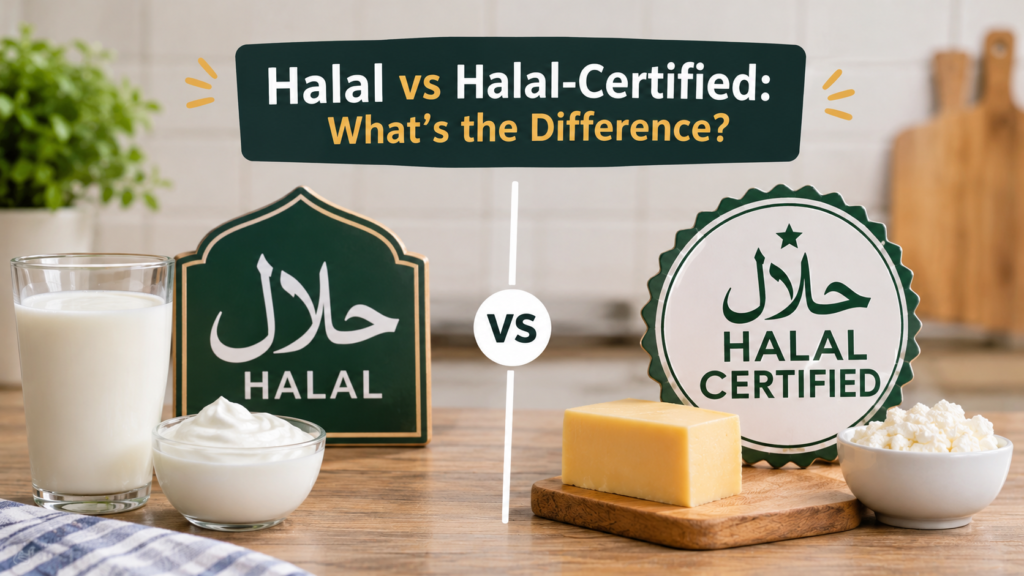
The terms Halal and Halal-certified are closely related, but they are not interchangeable.
A product may contain ingredients that are generally considered permissible under Halal dietary guidelines. However, a Halal-certified product has been assessed by a certification body against its applicable requirements.
The assessment may include:
- Ingredients and their sources.
- Manufacturing and processing methods.
- Production equipment and facilities.
- Storage and handling practices.
- Relevant supplier records.
For consumers, this distinction is useful. Understanding the ingredients gives an idea of what goes into a product, while certification provides additional information about its assessment against specific requirements.
When looking for Halal dairy products, consumers should understand whether they are checking the ingredients, the certification status or both.
4. Why Do Dairy Brands Need Halal Certification?
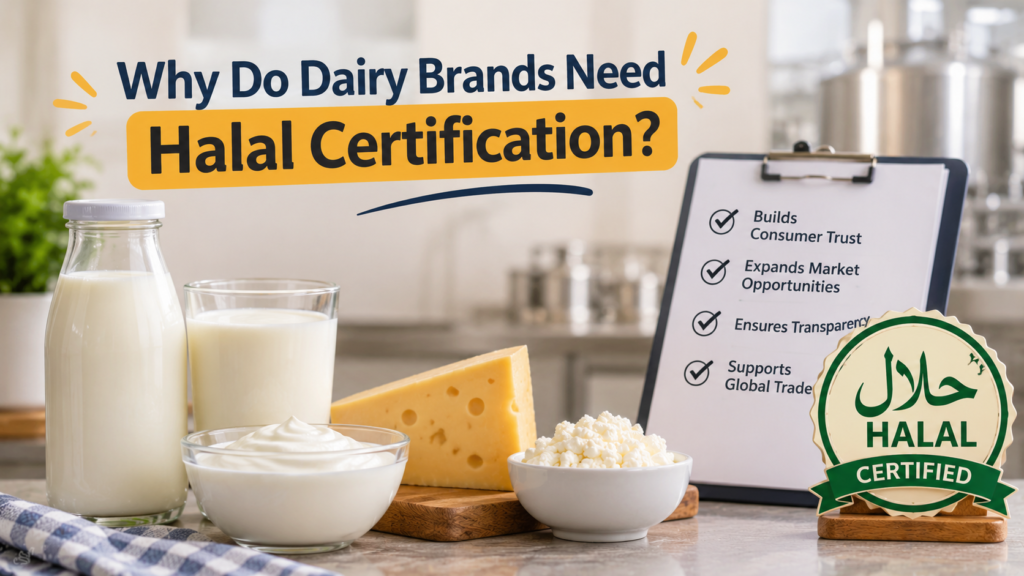
For dairy manufacturers, certification can be an important part of building consumer confidence. It also helps brands communicate their product credentials to customers who specifically look for Halal dairy products.
There are several reasons why businesses consider certification.
Consumer Confidence: It gives consumers additional information about whether a product has been assessed against applicable Halal requirements.
Market Opportunities: Some retailers, buyers and importing markets prefer or require certified products. Certification may help brands meet these requirements.
Better Documentation: Manufacturers are encouraged to maintain relevant records of ingredients, suppliers and production practices.
Brand Transparency: Clear certification information allows businesses to communicate product credentials more effectively.
However, certification is not simply about putting a logo on the packaging. Manufacturers must also meet the relevant requirements and maintain the applicable standards.
5. Are All Halal Certifications the Same?
Not necessarily. Different certification organisations may follow different standards, assessment procedures and recognition requirements.
A certificate accepted by one market may not automatically be recognised in another. Its acceptance can depend on the certification body, the importing country’s requirements and the scope of the certificate.
This is why manufacturers should understand their target market before selecting a certification organisation.
Consumers exploring Halal dairy products should also pay attention to the issuing organisation instead of relying only on the logo. The product or manufacturing facility covered by the certificate is equally important.
6. How Can Consumers Identify Halal Dairy Products in India?
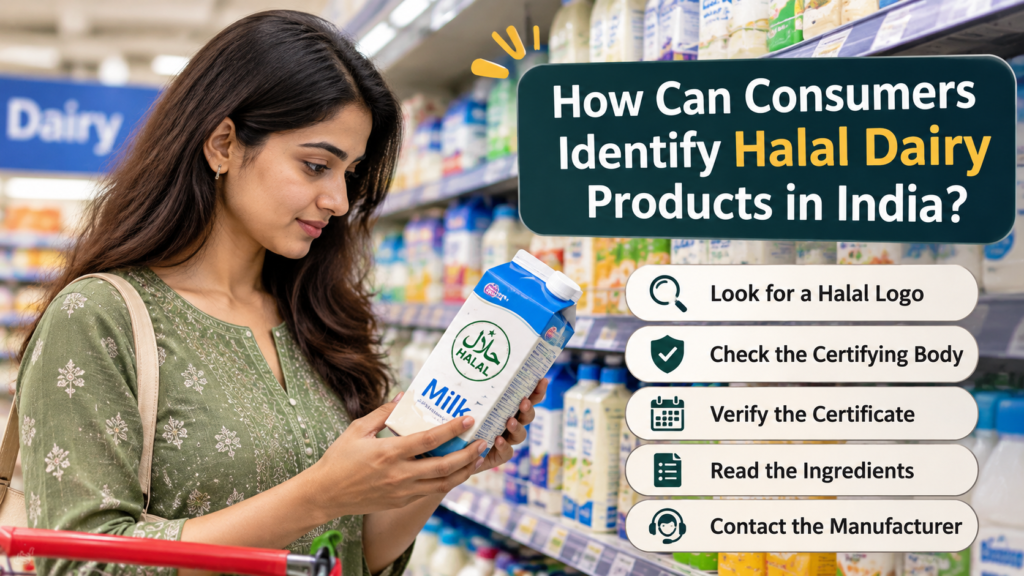
Checking a product’s packaging is a good starting point, but there are a few more things worth considering.
- Look for the logo: Check whether the packaging displays a Halal logo or certification information.
- Identify the certification body: Find out which organisation issued the certificate.
- Check certificate details: Where available, look for its number and validity.
- Understand the scope: See whether the certificate covers the specific product, brand or manufacturing facility.
- Contact the manufacturer: If the information is unclear, ask the brand for clarification.
These steps can help consumers understand the certification status of Halal dairy products before making a purchase.
One important point: the absence of a Halal logo does not automatically mean that a product is non-Halal. It may simply mean that the product does not carry formal Halal certification.
7. How Poorna Satya Helps Consumers Understand Dairy Products
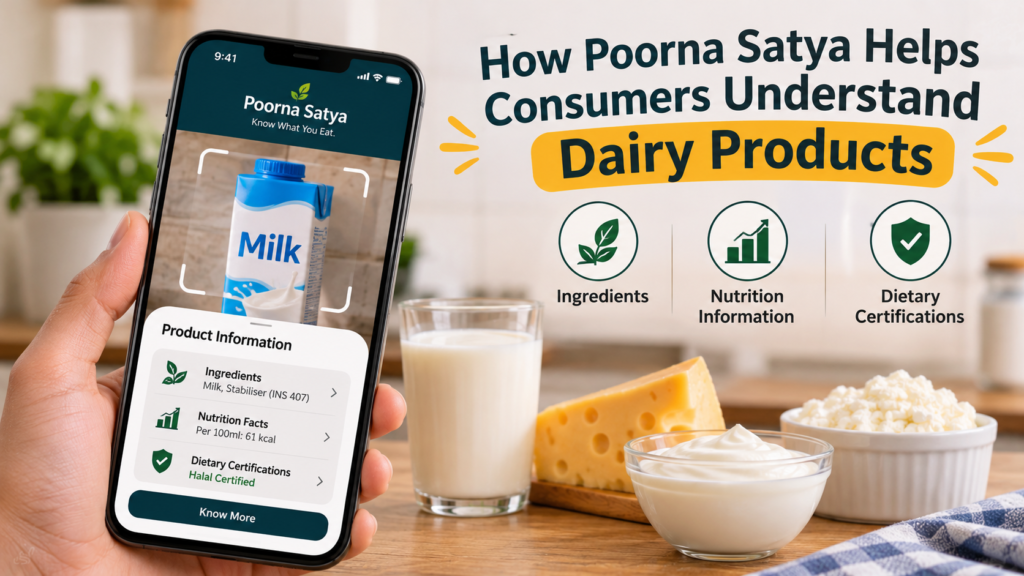
Choosing food is not just about checking the price, brand or expiry date. Consumers may also want to know what goes into a product, its nutritional composition and the dietary certifications associated with it.
Poorna Satya is a Food Transparency and Food Awareness Platform that brings three important types of product information together through one scan:
- Ingredients: Understand what goes into a product.
- Nutrition Information: Explore its nutritional composition.
- Dietary Certifications: Access available certification-related information, including categories such as Halal, Sattvik, Jain and others.
Whether someone is comparing packaged milk, cheese or other Halal dairy products, having access to relevant product information can make the decision-making process easier.
Poorna Satya aims to help consumers explore these details so they can make choices according to their individual dietary preferences.
Conclusion
Not all dairy products are made in the same way. While natural milk is generally considered Halal, processed products may require a closer look at their ingredients, manufacturing methods and certification status.
For consumers, a little attention to product information can make everyday shopping more informed. For manufacturers, clear documentation and transparent communication can help build stronger relationships with customers.
After all, knowing what goes into your food makes it easier to choose what works for you.
Poorna Satya – know what you eat.
For more content do follow : https://poornasatya.com/
