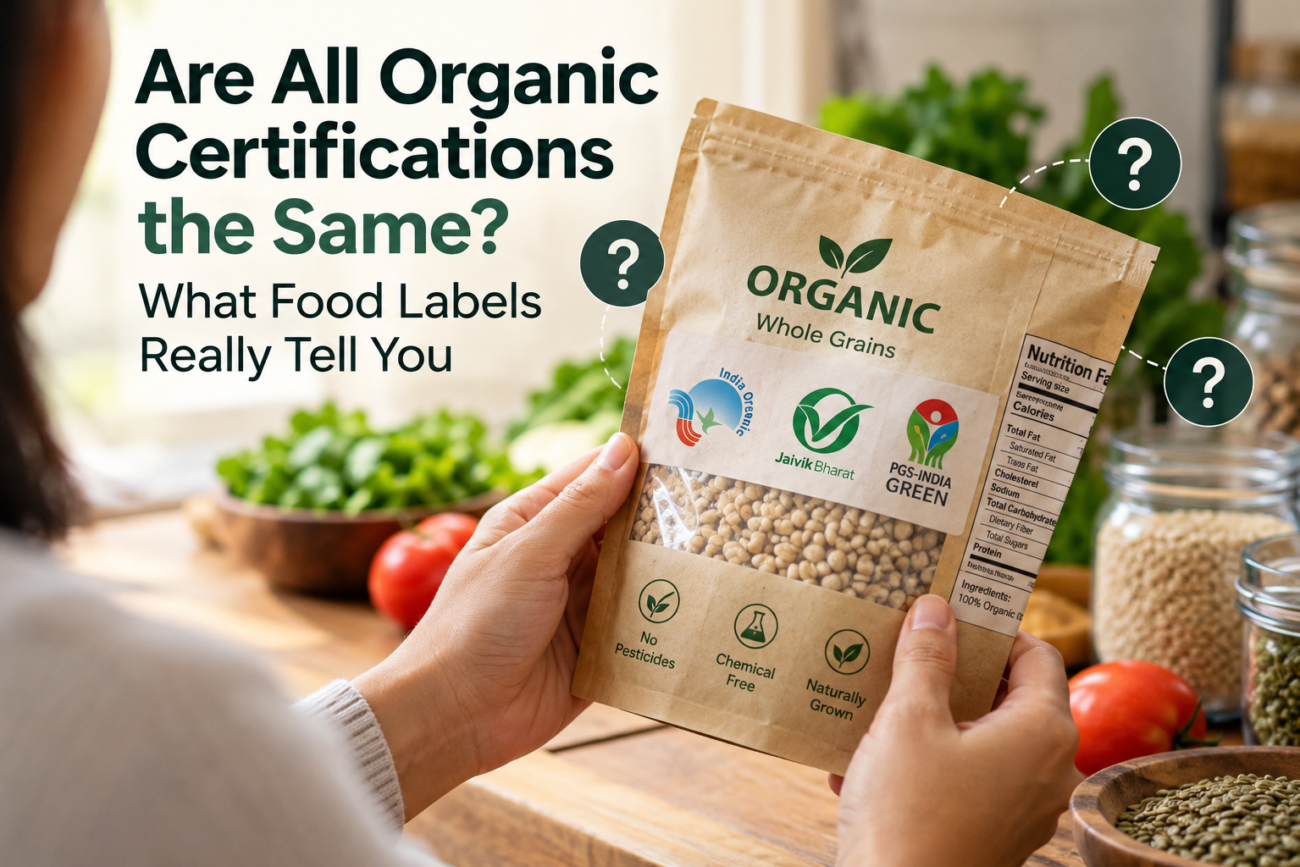
Have you ever picked up a food packet because it said “organic” and wondered what that label actually means? Many consumers associate organic food with specific farming practices, but not everyone knows how organic certification works or why different certification systems exist.
An organic label can tell you something about how a product was produced. However, the standards, verification methods and requirements behind an organic certification may vary. Understanding these differences can help you look beyond packaging claims and make more informed food choices.
So, are all organic certifications the same? Let’s explore the different systems, the labels you may see in India and what you should check before buying organic food.
What Is Organic Certification?
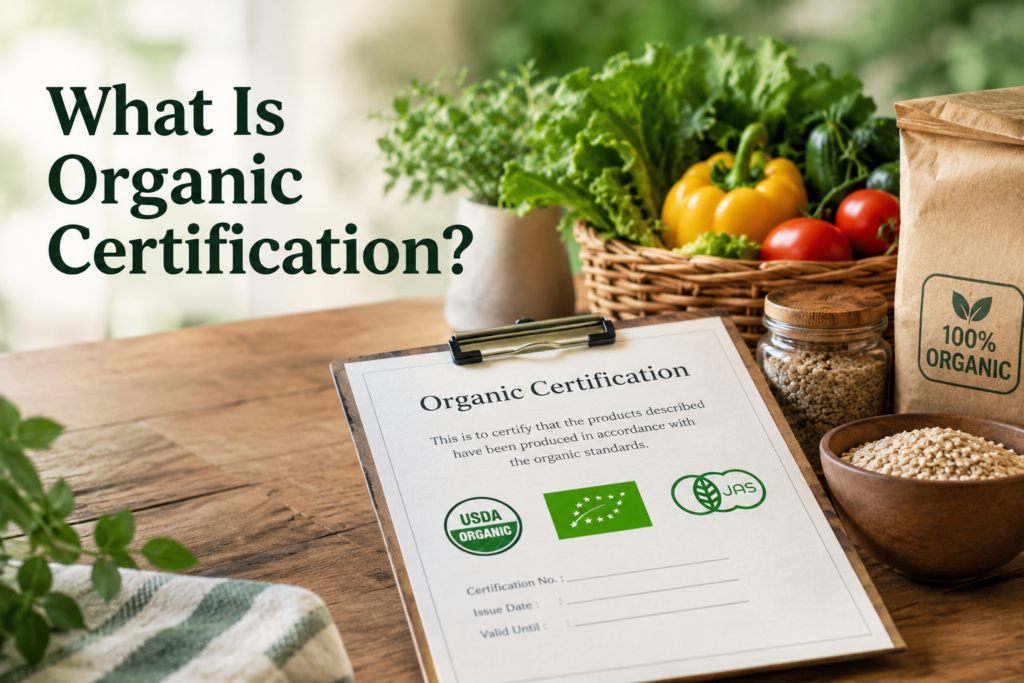
Organic certification is a process used to assess whether agricultural products meet specific standards for organic production. These standards may cover farming practices, permitted inputs, processing, storage, handling and record-keeping.
In simple terms, an organic certification provides a way to establish whether a product meets the requirements of a recognised organic system. It also helps distinguish certified products from those that simply use organic-related words in their marketing.
However, not every organic certification follows the same procedures. Different systems may have different verification methods and documentation requirements. That’s why understanding the certification behind a label can be just as important as noticing the word “organic” itself.
Are All Organic Certifications the Same?
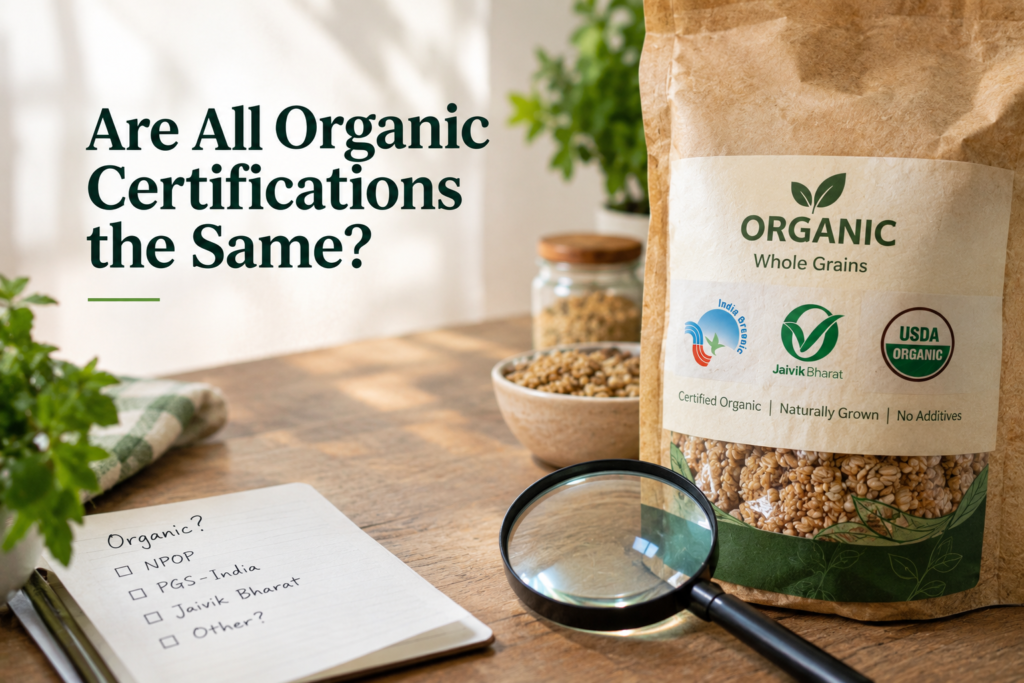
No. Organic certification systems can differ in their standards, verification methods and labelling requirements. These differences may also depend on the country where a product is produced or sold.
In India, the Food Safety and Standards Authority of India (FSSAI) recognises two organic certification systems under the Food Safety and Standards (Organic Foods) Regulations, 2017: the National Programme for Organic Production (NPOP) and Participatory Guarantee System for India (PGS-India).
Both systems support organic production, but their approaches are different.
1. NPOP: National Programme for Organic Production
The National Programme for Organic Production, commonly known as NPOP, is implemented by the Agricultural and Processed Food Products Export Development Authority (APEDA), under the Ministry of Commerce and Industry.
It establishes standards for organic production and includes procedures for inspection, certification and accreditation of certification bodies. NPOP is particularly relevant to India’s organic export sector.
Products certified under this system may carry the India Organic logo, subject to applicable requirements.
When checking an organic certification mark, consumers should understand that it represents a particular system and its standards rather than assuming every certification works in exactly the same way.
2. PGS-India: Participatory Guarantee System
PGS-India takes a participatory approach to organic assurance. Producers and other stakeholders participate in a decentralised system designed to support organic farming and verification.
The programme is particularly relevant to local and domestic markets.
Although NPOP and PGS-India operate within India’s organic food regulatory framework, their verification and documentation approaches differ. Their certification marks should not automatically be treated as interchangeable in every situation.
Understanding which organic certification system applies can help consumers interpret the information displayed on a package more accurately.
3 Things to Check Before Buying Organic Food
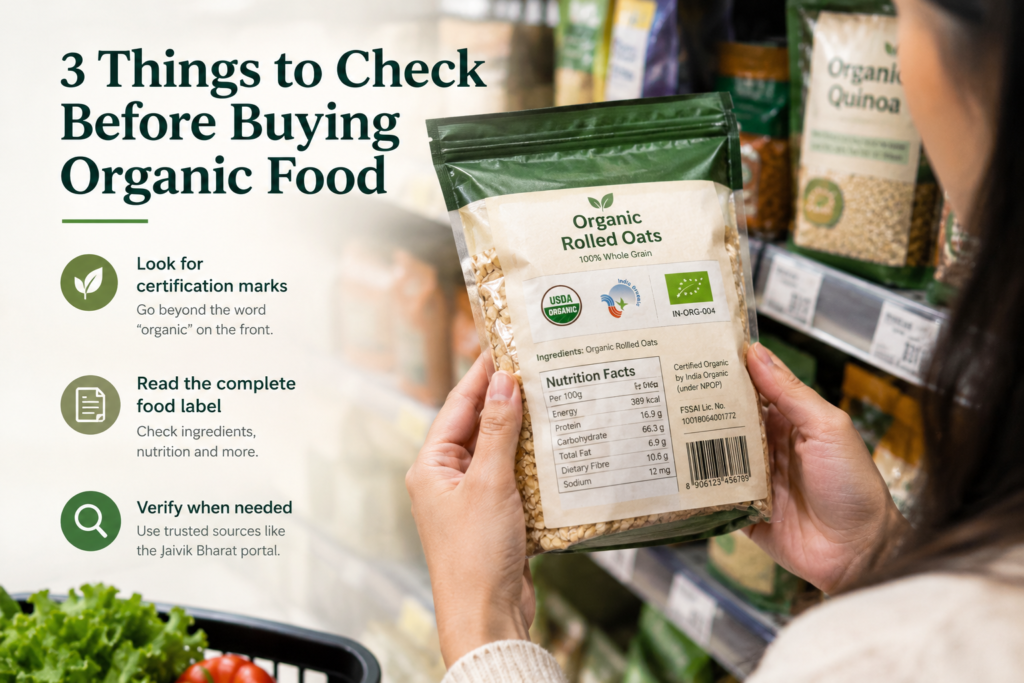
1. Look Beyond the Word “Organic”
The word “organic” can easily catch your attention, but it’s worth looking beyond the front of the package.
Check the relevant organic certification marks and product details to understand which system applies. If you are unsure about a claim, consult the relevant official resources rather than relying entirely on packaging design or advertising.
2. Read the Complete Food Label
Organic status and nutritional value are two different things.
A product can meet organic production standards without necessarily being low in sugar, salt or saturated fat. That’s why checking the ingredients and nutrition information remains important.
For example, an organic snack may contain added sugar or significant amounts of saturated fat. Its organic certification alone won’t tell you this.
Reading the complete label helps you understand what you’re buying and compare products according to your preferences.
3. Verify Information When Needed
If you’re uncertain about an organic certification claim, don’t rely solely on the wording or appearance of the package.
You can check the Jaivik Bharat portal or consult the relevant certification authority for further information. This can be particularly helpful when comparing products with different certification marks or when you want to understand the standards behind a claim.
Taking a moment to verify the details can give you a clearer understanding of what the label represents.
Frequently Asked Questions (FAQs)
1. Are all organic certifications the same?
No, organic certifications can differ in their standards, verification methods and documentation requirements. In India, NPOP and PGS-India are two recognised systems for organic food. Understanding the certification behind a label can help consumers interpret organic claims more clearly.
2. What is organic certification?
Organic certification is a process used to assess whether agricultural products meet specific organic production standards. These standards may cover farming practices, permitted inputs, processing, handling and record-keeping.
3. What is the difference between NPOP and PGS-India?
NPOP (National Programme for Organic Production) is implemented by APEDA and is particularly relevant to India’s organic export sector. PGS-India (Participatory Guarantee System for India) follows a participatory approach and is especially relevant to local and domestic markets. Both systems have their own verification procedures.
4. Does organic certification mean a product is healthy?
Not necessarily. Organic certification relates to compliance with applicable organic production standards. It does not automatically mean a product is low in sugar, salt or saturated fat. Reading the ingredients list and nutrition information is still important.
5. How can I check whether an organic food claim is genuine?
Look for the relevant certification marks and product details on the packaging. You can also consult official resources, such as the Jaivik Bharat portal, to find information about organic food and certified businesses.
Understanding Organic Labels Makes Food Choices Easier
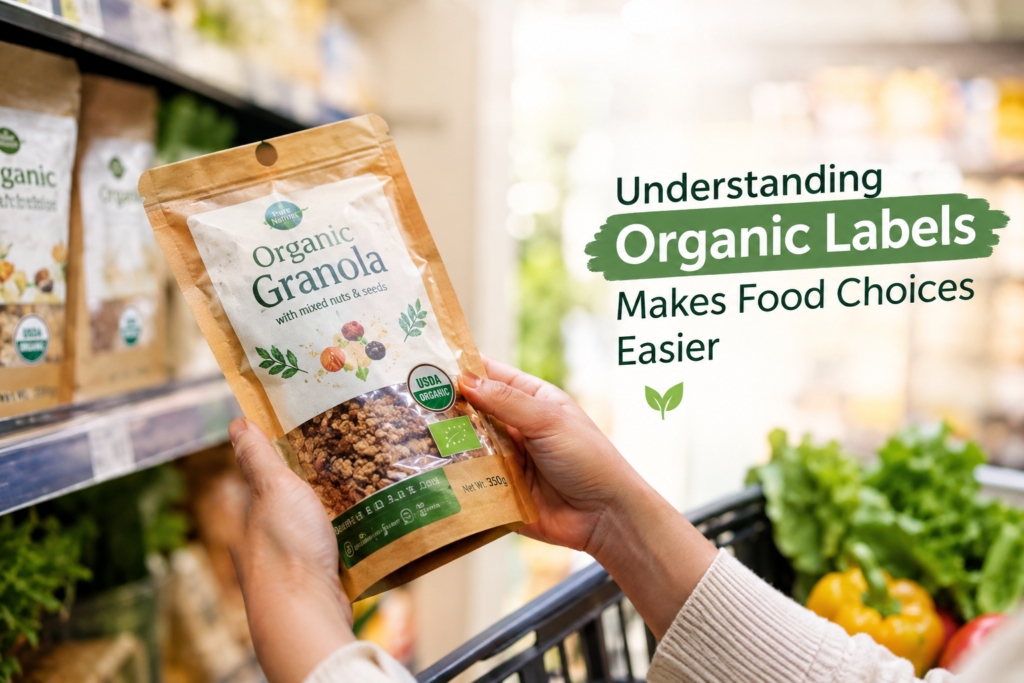
Not all organic certifications are identical. Their standards, verification processes and documentation requirements may vary, so understanding the system behind a label can help you make better-informed decisions.
Learning about organic certification is also part of a broader understanding of food transparency. Ingredients, nutrition information and dietary certifications each provide different details about a packaged product.
At Poorna Satya, we believe food information should be easier to explore and understand. Our platform brings together three key layers of packaged-food information-ingredients, nutrition information and dietary certification details -in one scan.
This helps consumers explore product information and make choices based on their individual preferences.
The goal isn’t to tell people what to eat. It’s to make useful information more accessible so they can decide for themselves.
Know What You Eat.
for more content dofollow : https://blog.poornasatya.com/food-label-hidden-secrets/
