When you pick up a packet of chips, biscuits or cereal, do you always check the nutrition table? Packaged foods list details such as sugar, salt and fat, but many shoppers do not have time to understand every number.
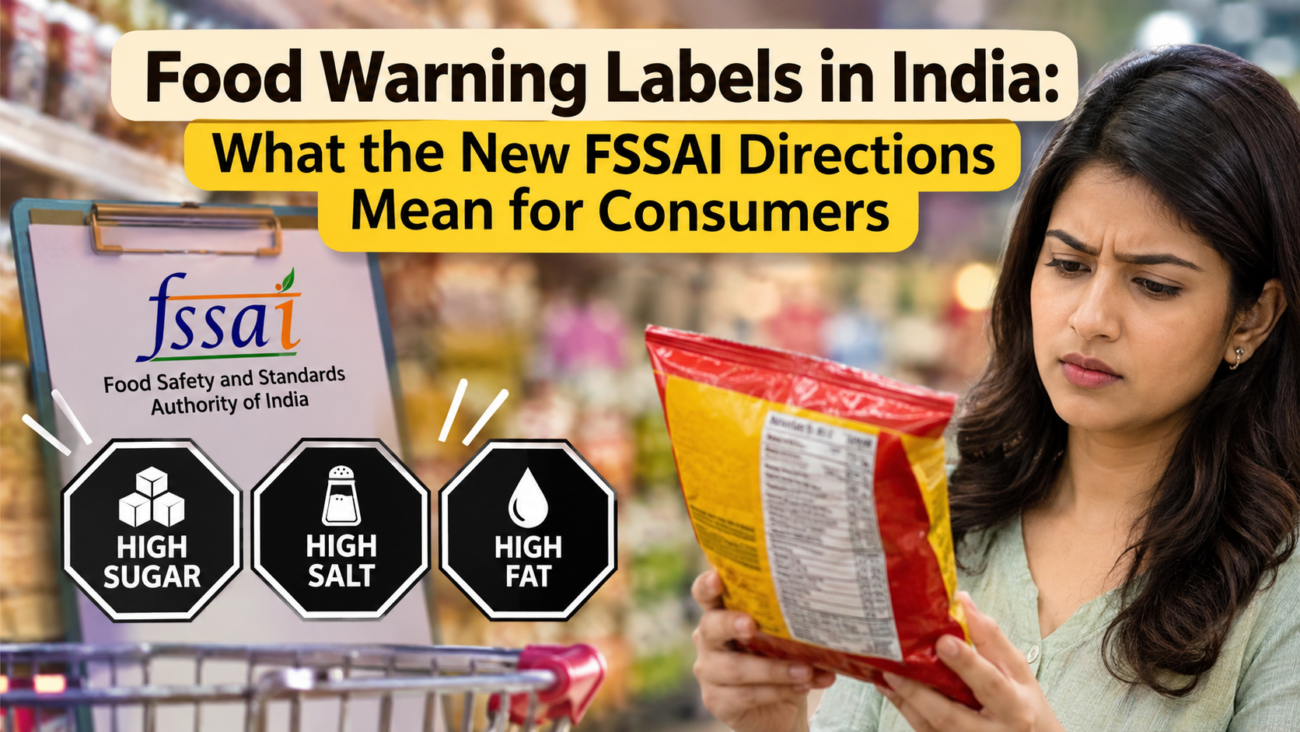
On November 26, 2026, the Supreme Court issued directions to the Food Safety and Standards Authority of India (FSSAI) and the Union Government to strengthen nutrition warnings on packaged food. The focus is on making high sugar, salt and fat information easier to notice. Here is what the latest Food Warning Labels in India could mean for consumers and food businesses.
What Are the Latest Changes in India’s Food Labelling Rules?
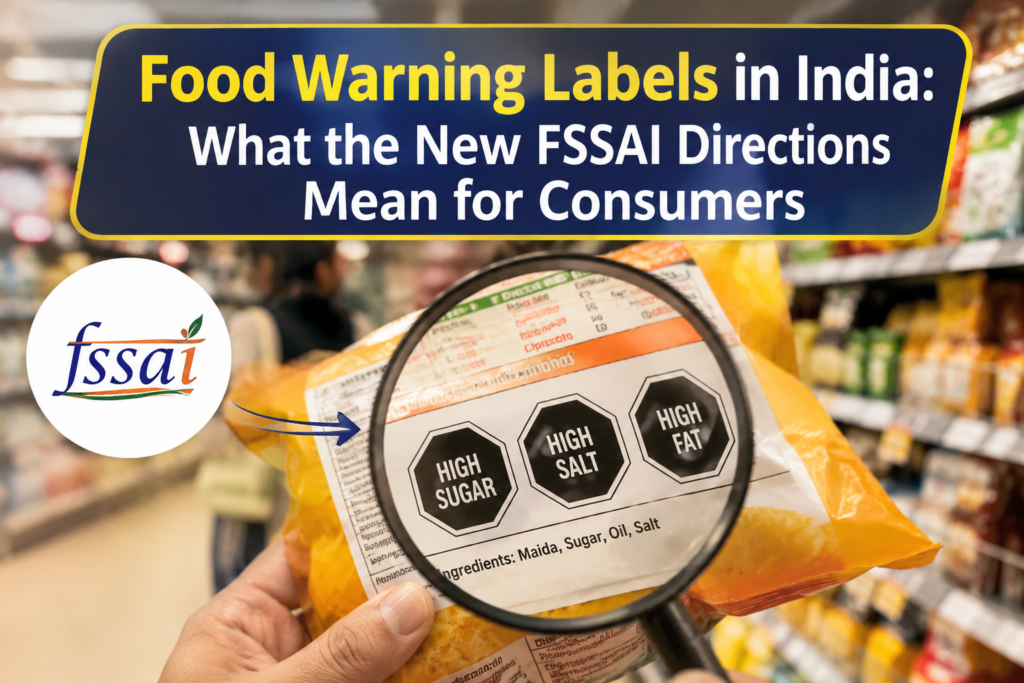
The Supreme Court has directed FSSAI and the Union Government to strengthen the Front-of-Pack Nutrition Labelling (FoPNL) framework.
Detailed nutrition information is usually printed on the back or side of a packet. The proposed approach aims to bring key warnings to the front, where shoppers can notice them more easily.
The main points include separate pictorial warnings for high sugar, high salt and high fat, along with scientific thresholds to decide when a warning is required. Total sugars and saturated fat are also to be considered while setting the relevant thresholds.
In simple terms, Food Warning Labels in India are intended to make important nutritional information more visible at the point of purchase.
What Is Front-of-Pack Nutrition Labelling (FoPNL)?
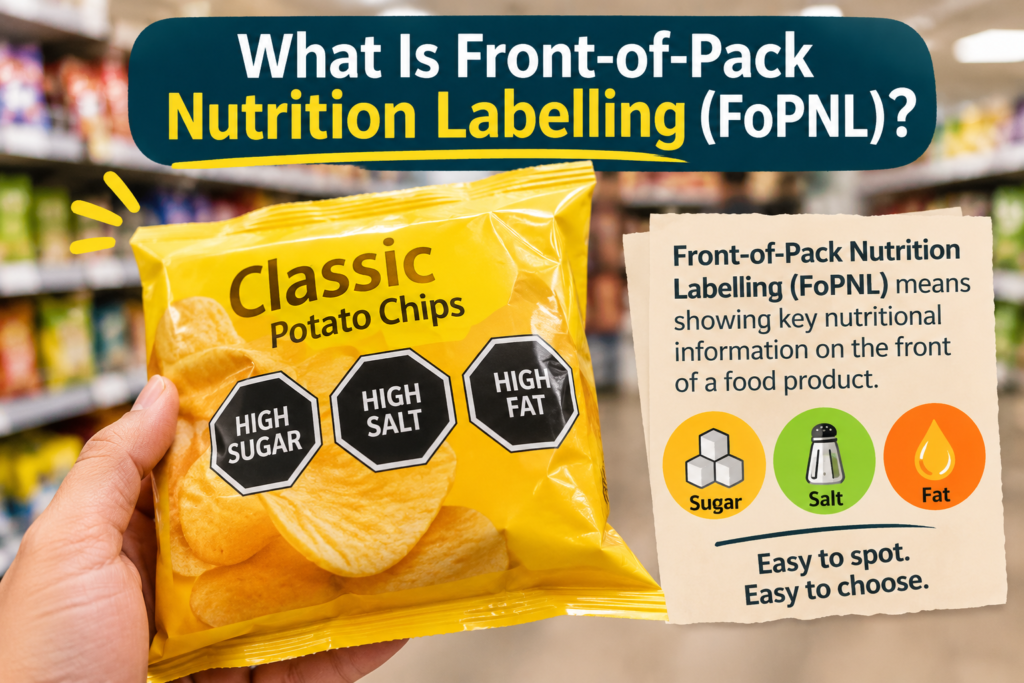
Front-of-Pack Nutrition Labelling, commonly called FoPNL, means displaying key nutrition information prominently on the front of a packaged food product. It is the basic idea behind the proposed Food Warning Labels in India.
Shoppers often make quick decisions based on a product’s brand, price or flavour. A clear warning on the front can help them notice a nutritional concern before buying.
For example, a high-salt warning can help shoppers compare two snack products. FoPNL does not replace the detailed nutrition table; it highlights selected information on the front. This is the purpose of Food Warning Labels in India: making key details easier to notice at a glance.
What Warning Labels Will Appear on Food Packaging?
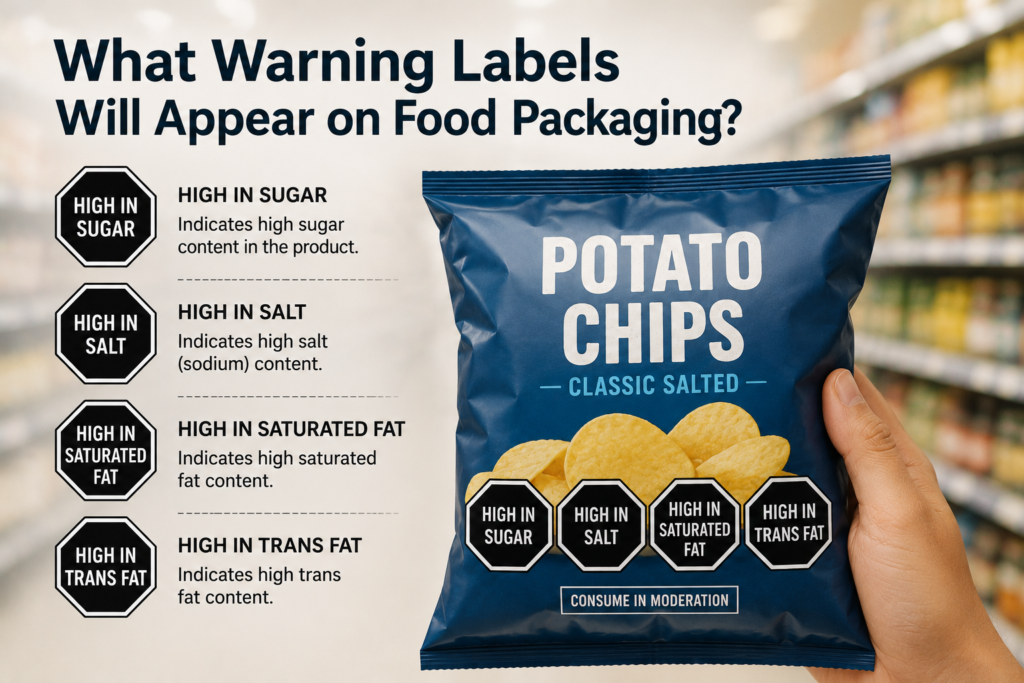
The directions focus on three nutrients: sugar, salt and fat. Each is expected to have a separate warning, based on the prescribed threshold.
High Sugar
A high-sugar warning would identify products above the specified sugar limit. It may help when comparing drinks, biscuits, cereals and sweets. The directions refer to total sugars when setting thresholds, rather than looking only at added sugar.
High Salt
A high-salt warning would highlight products above the prescribed limit. This may be useful when checking packaged snacks, instant foods, sauces and ready-to-eat meals, especially for people monitoring their salt intake.
High Fat
The high-fat category in the proposed Food Warning Labels in India gives particular attention to saturated fat, which is one component of total fat. The Court has directed that saturated fat be considered when the warning thresholds are set.
Why Separate Symbols Matter
The proposed framework refers to separate hexagonal warning symbols with clear wording:
- HIGH SUGAR
- HIGH SALT
- HIGH FAT
A product that crosses the limits for more than one nutrient may carry multiple warnings. Separate symbols can show which specific concerns apply. This is a key feature of Food Warning Labels in India.
How Will the New Labelling Rules Affect Food Manufacturers?
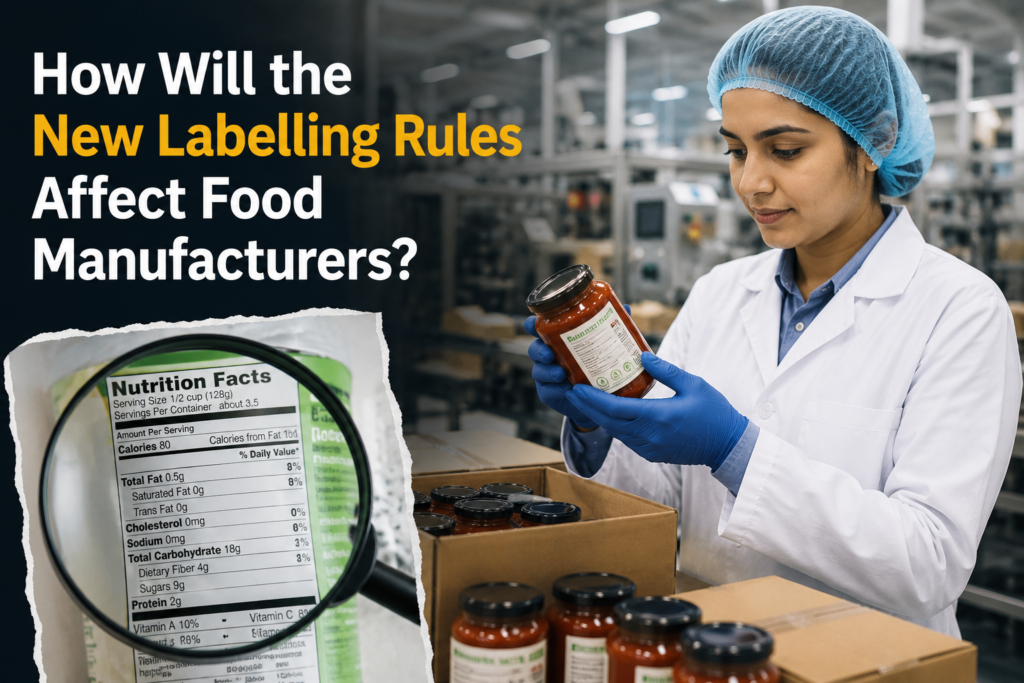
Food Warning Labels in India may also require manufacturers to review their packaging, recipes and processes.
Packaging design: Brands may need to make space for clearly visible warning symbols.
Product formulation: Manufacturers may review recipes to see whether products cross the prescribed thresholds.
Nutritional testing: Accurate nutrition data will help determine whether a warning is required.
Regulatory compliance: Businesses will need to follow the final requirements once FSSAI notifies the regulations.
These changes could involve additional packaging and product-development work. The exact obligations will depend on the final rules and thresholds.
When Will the New Food Labelling Rules Be Implemented?
The Supreme Court has directed FSSAI to finalise the draft regulations within approximately four months. This includes developing the framework and deciding nutrient thresholds.
The directions also refer to a 365-day implementation period for food business operators after the regulations are rolled out. This will give businesses time to prepare and update packaging.
These directions do not mean that every packaged product must already display the new warnings. The final regulations and their notification will confirm the actual requirements and timelines for Food Warning Labels in India.
Are Front-of-Pack Warning Labels Enough to Understand a Food Product?
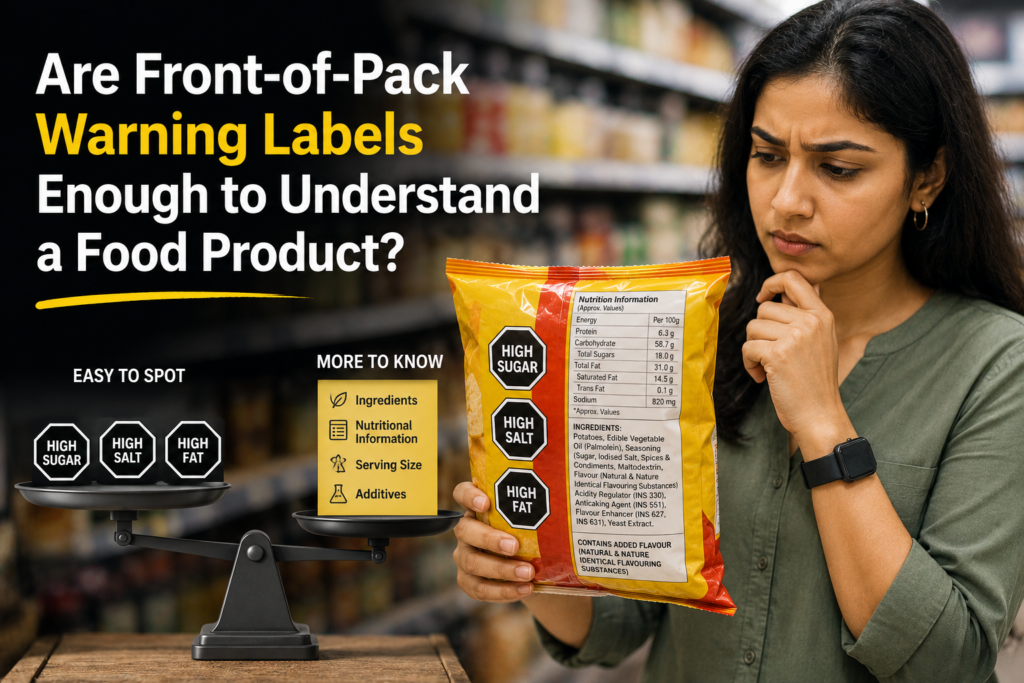
Warning symbols highlight specific nutritional concerns, but they cannot tell the complete story of a product. Consumers should also check the other information on the label.
Ingredients: The ingredient list shows what has been used to make a product. Ingredients are generally listed from the highest to the lowest quantity by weight.
Nutrition information: The nutrition table may show calories, carbohydrates, protein, fat, sugar and sodium. Check the serving size too, as the figures relate to a stated quantity.
Dietary certifications: Certifications such as Sattvik, Halal, Jain, Kosher, Vegan, Organic and Gluten-Free can help people identify products that match their preferences or dietary requirements, where applicable.
Each detail answers a different question. Checking all three gives a broader understanding than relying only on a warning symbol. Food Warning Labels in India should therefore be one part of reading a food label, not the only part.
How Does Poorna Satya Support Better Food Transparency?
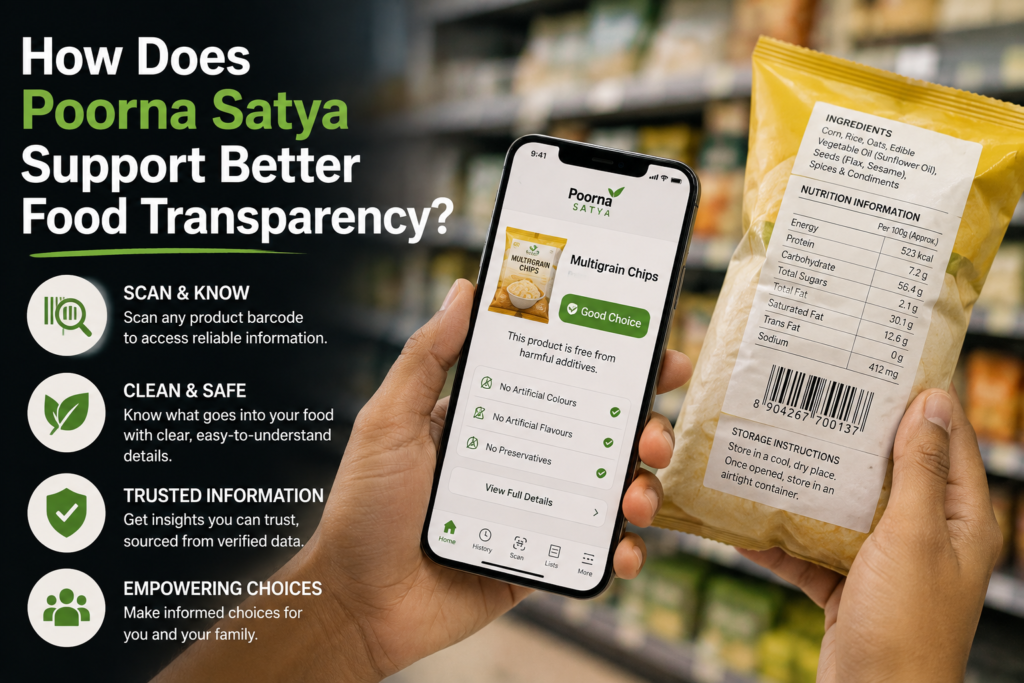
Poorna Satya is a Food Transparency and Food Awareness Platform that helps users explore packaged food information. Through a single product scan, users can access three categories:
- Ingredients: Information about the ingredients used in a product.
- Nutrition Information: Details about the product’s nutritional composition.
- Dietary Certifications: Certification-related information such as Sattvik, Halal, Jain, Kosher, Vegan and other categories, where available.
Front-of-pack warnings highlight specific nutritional concerns, while these categories help users explore more about a product. Poorna Satya does not decide what people should eat. It aims to make information easier to access so consumers can make choices based on their own needs and preferences.
As Food Warning Labels in India bring more attention to nutrition, access to these other details can also support informed choices.
Conclusion: Better Food Labels, Better-Informed Choices
The Supreme Court’s directions mark an important development in food labelling in India. Separate warnings for high sugar, salt and fat could help shoppers notice key nutritional information more quickly.
However, one symbol cannot explain everything about a product. Ingredients, nutrition values, serving sizes and dietary certifications also matter. Food Warning Labels in India can make information easier to see, while reading the full label helps consumers make better-informed choices.
Poorna Satya – Know What You Eat.
for more content do follow : https://poornasatya.com/
