Have you ever picked up a food packet because one line on the front sounded exactly like what you were looking for?
“No Added Sugar.”
“High Protein.”
“Immunity Support.”
You see it, you think it sounds good, and into the shopping basket it goes.
Fair enough. We all do it.
When we’re shopping, especially when we’re in a hurry, the front of the packet is usually what gets our attention first. It’s big, colourful and easy to understand. The rest of the label? That usually gets ignored until there’s a reason to look at it.
But here’s where things get interesting.
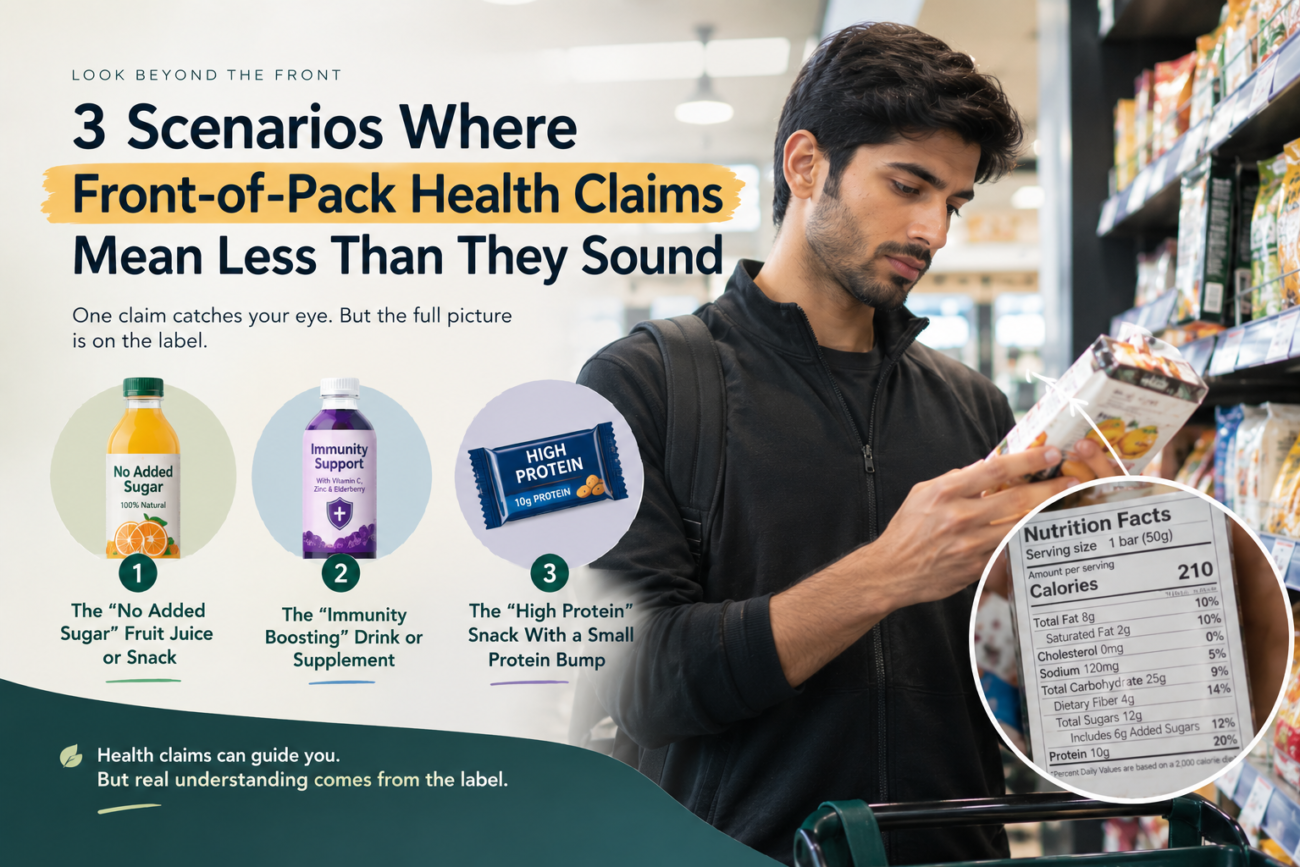
A health claims usually tells you about one particular feature of a product. It doesn’t necessarily tell you the complete story.
A drink can say “no added sugar” and still contain naturally occurring sugar. A snack can say “high protein” without necessarily being the right choice for your overall nutritional needs. And a drink marketed for “immunity” may sound more powerful than what the rest of the product information actually tells you.
This doesn’t mean that these claims are automatically misleading or that the products are bad.
It simply means that one claim isn’t the whole product.
So, let’s look at three very common situations where a health claim deserves a second look.
1. The “No Added Sugar” Fruit Juice or Snack
You’re looking for something for yourself or your family.
You pick up a fruit drink or snack and notice the words “No Added Sugar” printed clearly on the front.
That sounds reassuring.
Your first thought might be:
“At least there’s no added sugar, so this should be a better option.”
Maybe. But before making that decision, it helps to understand what the claim actually means.
No Added Sugar Doesn’t Mean No Sugar
This is an easy detail to miss.
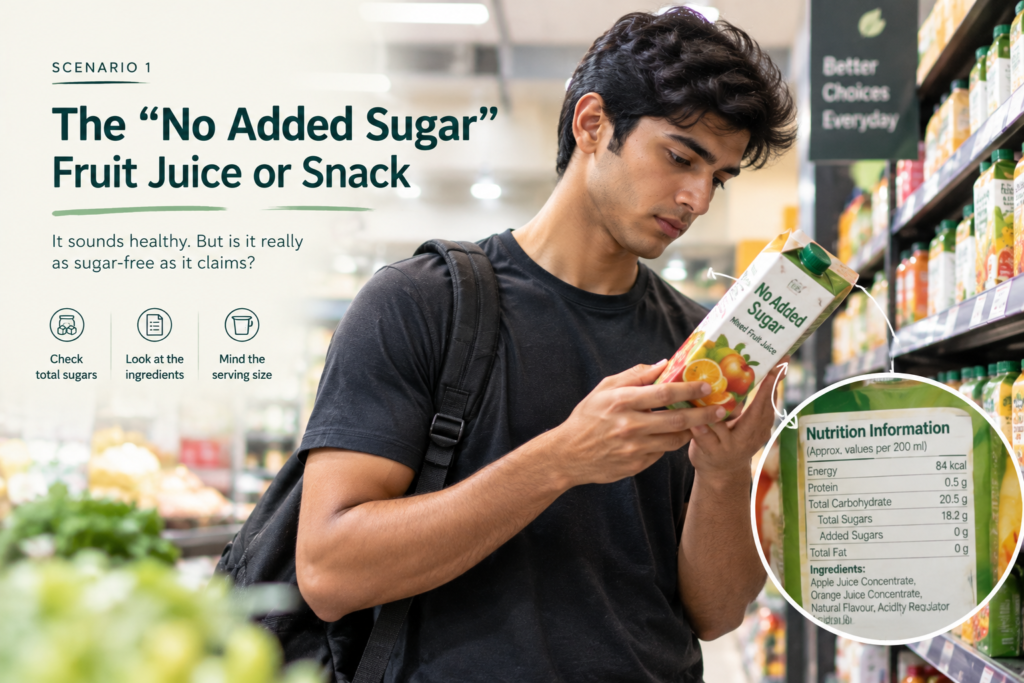
A product can have no sugar added during manufacturing and still contain sugar naturally present in some of its ingredients.
Fruit, for example, naturally contains sugar.
So if you’re picking up a fruit-based drink or snack, don’t stop at the words “No Added Sugar.” Turn the packet around and take a quick look at the Nutrition Information. This is especially important when you’re trying to understand what health claims on the front of the pack actually mean.
Check things such as:
- Total sugars
- Serving size
- Total carbohydrates
- Calories
- Ingredients
The serving size is particularly important.
Sometimes we look at the number on the label and mentally apply it to the entire packet, without noticing that the information is actually given per serving.
That’s an easy mistake to make.
And it doesn’t mean the “No Added Sugar” health claim is useless.
It simply means you need a little more information to understand what you’re actually buying.
The front gets your attention. The label gives you context.
Think of the front of the packet as the introduction.
It tells you what the brand wants you to notice first, especially through health claims that highlight a particular feature of the product.
The rest of the food label gives you more context and helps you understand what those health claims actually mean.
So, instead of asking only:
“Does this say no added sugar?”
you can ask:
“What else does the label tell me about this product?”
That small change can make your food choices much more informed without making grocery shopping complicated.
2. The “Immunity Boosting” Drink or Supplement
Now let’s take a different example.
It’s winter. Or maybe everyone around you seems to be talking about immunity.
You walk into a store and see a drink or supplement with words like:
“Immunity Support.”
“Boosts Immunity.”
“Immune Defence.”
The message is pretty clear: this product is supposed to sound good for your health.
And because the word “immunity” carries such a strong positive association, it’s easy to assume that the product must be something your body needs.
But this is exactly when it’s worth slowing down for a moment.
What exactly is the product offering?
A health-related claim can make a product sound impressive, but the claim itself doesn’t tell you everything about the product.
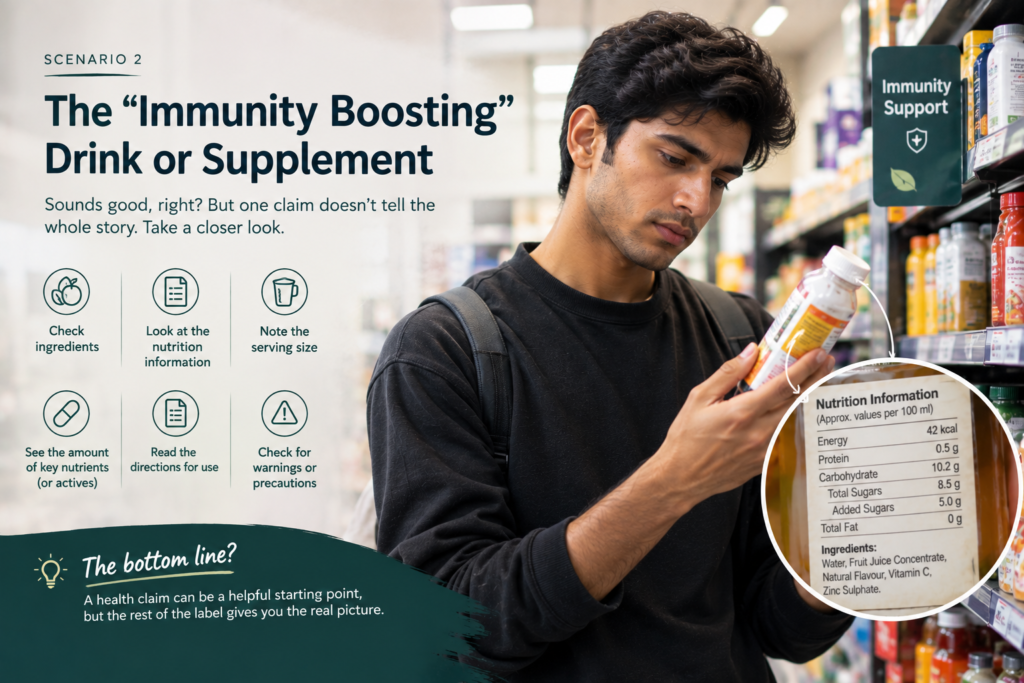
Before buying it, look at the information on the package.
Check:
- Ingredients
- Nutrition Information
- Serving size
- Amount of relevant nutrients or other listed ingredients
- Directions for use
- Any warnings or precautions
This is especially important when you’re looking at supplements.
The word “immunity” can make a product sound like a complete answer to staying healthy.
But good health isn’t that simple.
A single drink or supplement isn’t a replacement for a balanced diet, regular habits or appropriate medical advice when needed.
Don’t Let One Word Make the Decision for You
This is one of the biggest things to remember about front-of-pack health claims.
Our brains naturally use shortcuts.
If something says “immunity support,” we may automatically think:
“This must be good for my health.”
Instead, take a second and ask:
“What exactly is this product claiming?”
Then look at the rest of the information.
You don’t have to distrust the product.
You don’t have to become a nutrition expert.
You just need to understand what you’re actually buying and look at health claims in the context of the complete label.
That’s what food transparency should help with—making information clearer, not making food choices more stressful.
3. The “High Protein” Snack With a Small Protein Bump
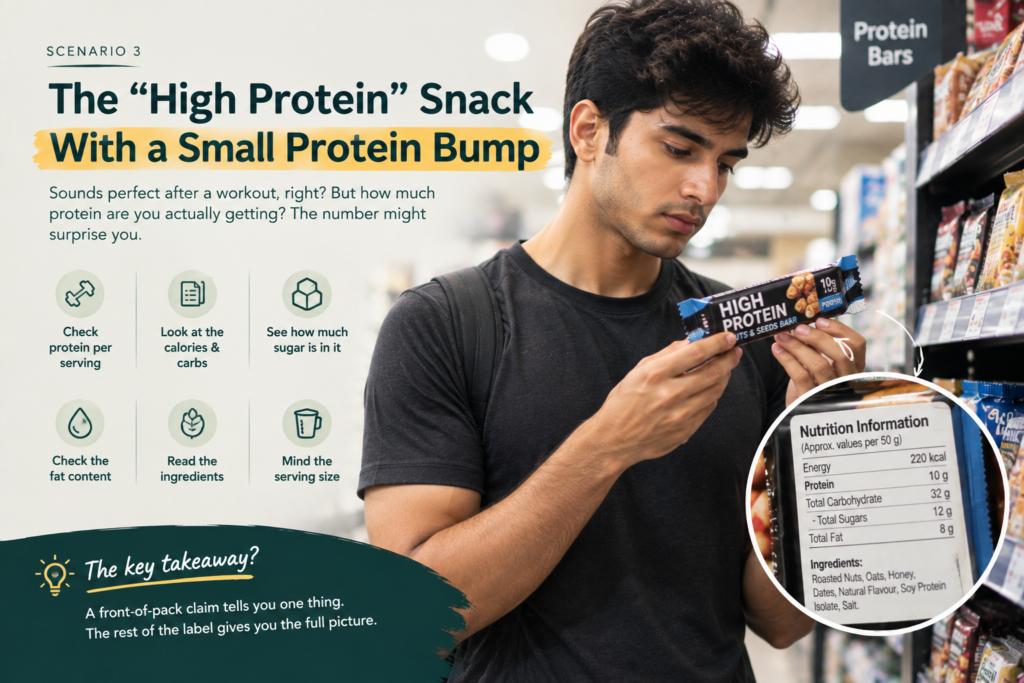
This one is especially common in the fitness and snack aisles.
You’ve just finished a workout.
You’re hungry, you want something quick and convenient, and then you spot a snack with “HIGH PROTEIN” written across the front.
It immediately feels like the obvious choice.
But here’s a question worth asking:
How much protein is actually in it?
The headline isn’t the whole story
“High Protein” tells you something about the product.
But it doesn’t tell you everything.
Take a quick look at the Nutrition Information and check:
- Protein per serving
- Serving size
- Calories
- Total carbohydrates
- Sugars
- Fat
- Ingredients
Now imagine you’re comparing two similar snacks.
One has “High Protein” written in large letters across the front.
The other doesn’t make the same claim.
You might automatically assume that the first one is significantly better for your protein needs.
But once you actually compare the numbers, the difference may not be as dramatic as the packaging made it feel.
That’s why the number matters more than the headline.
Ask what comes with the protein
Protein may be your main reason for buying the product, and that’s completely fine.
But it’s still useful to ask:
“What else am I getting with it?”
A product is more than one nutrient.
You may also want to know about its calories, sugars, carbohydrates, fats and ingredients depending on what you’re looking for.
Again, this isn’t about declaring a product “healthy” or “unhealthy.”
It’s about understanding whether this particular product fits what you want.
And that’s a much more useful question.
Why Do We Believe Front-of-Pack Health Claims So Quickly?
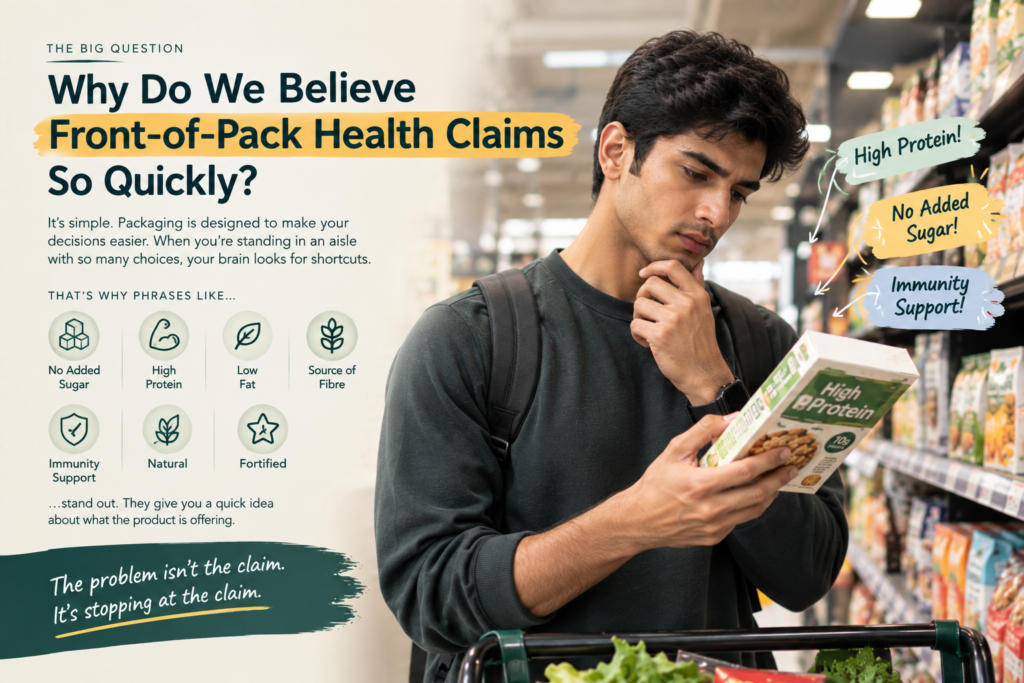
There’s nothing unusual about it.
Packaging is designed to make shopping easier and faster.
When you’re standing in a supermarket aisle with ten similar products in front of you, you aren’t going to read every single word on every packet.
You naturally look for shortcuts.
That’s why phrases such as:
- No Added Sugar
- High Protein
- Low Fat
- Source of Fibre
- Immunity Support
- Fortified
- Natural
stand out.
They help you understand something about the product quickly.
The problem starts when that one piece of information becomes the entire reason for your decision.
A product with a “High Protein” claim can still have other nutritional characteristics worth checking.
A “No Added Sugar” product can still contain naturally occurring sugars.
An immunity-related claim doesn’t automatically mean the product is necessary for your health.
The claim isn’t necessarily the problem.
Stopping at the claim can be.
A Simple Habit: Claim First, Label Second
You don’t need to spend ten minutes studying every packet you buy.
Instead, try this simple habit when you come across health claims on packaged food.
1. Notice the claim
What caught your attention?
Was it protein?
Sugar?
Fibre?
Vitamins?
Something related to immunity?
Just identify what the front of the packet is highlighting through its health claims.
2. Turn the packet around
Now take a quick look at the Nutrition Information and ingredients.
You don’t have to read every line.
Focus on the information that’s relevant to your reason for buying the product.
3. Check the serving size
This tiny detail can change how you understand the numbers.
Make sure you know whether the information applies to the whole pack or just one serving.
4. Put the claim into context
Ask yourself:
“Does the rest of the label give me the information I need?”
That’s it.
You’re not trying to prove the packaging wrong.
You’re simply looking at the bigger picture and understanding what the health claims mean in the context of the complete label.
Health Claims Aren’t the Enemy
It’s also important not to go too far in the other direction.
Not every health claim should automatically be treated with suspicion.
These claims can genuinely help consumers quickly identify certain characteristics of a product.
The problem is assuming that one characteristic tells you everything.
Think about it this way:
“High Protein” tells you about protein.
It doesn’t automatically tell you about everything else.
“No Added Sugar” tells you something about added sugar.
It doesn’t describe the entire nutritional profile.
“Immunity Support” tells you what the product is being positioned around.
It doesn’t tell you that the product is a complete solution for your health.
The important thing is context.
And context comes from looking beyond the front of the pack.
Why Food Transparency Matters
This is where food transparency becomes useful.
When you buy packaged food, you often need more than one piece of information to decide whether it works for you.
You may want to know:
- What’s in the product?
- What does the Nutrition Information say?
- What is the serving size?
- Are there relevant dietary certifications?
- Are there allergens I should know about?
- What exactly is the front-of-pack claim saying?
When you look at these details together, you get a much clearer picture.
And that’s the point.
Food information shouldn’t make you feel like you need a degree in nutrition just to buy a snack.
It should simply help you understand your options.
Because food choices are personal.
What works for someone who goes to the gym every morning may not be what another person is looking for.
What one family considers important may be completely different from another family’s priorities.
There isn’t one perfect choice for everyone.
There is only the choice that makes sense for you.
How Poorna Satya Helps You Look Beyond the Front of the Pack
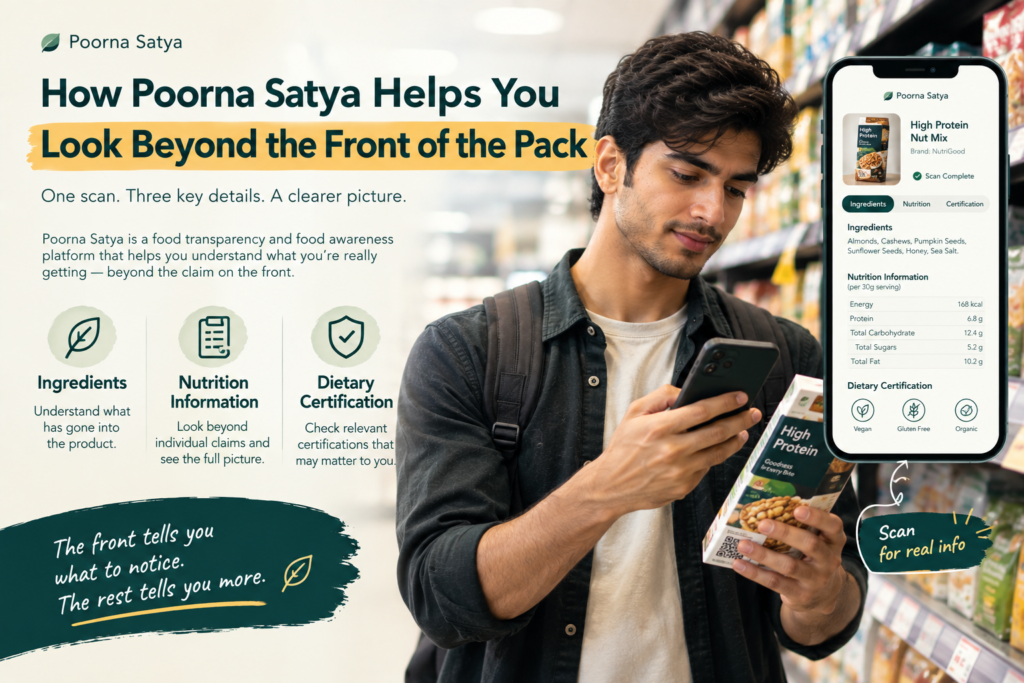
Poorna Satya is built around making packaged-food information easier to understand.
With one scan, users can access three important areas:
Ingredients
Understand what has gone into the product instead of relying only on the front-of-pack message.
Nutrition Information
Look beyond individual health claims and see the nutritional details that matter.
Dietary Certification
Check relevant certification information that may be important for your dietary preferences.
The idea is simple.
You don’t have to ignore packaging claims.
You just don’t have to stop there either.
Because sometimes, the most useful information is the information you notice after turning the packet around.
Know What You Eat.
Frequently Asked Questions About Health Claims
What are health claims on food packaging?
Health claims are statements used on food or beverage packaging to highlight a particular nutritional or health-related characteristic of a product. They usually focus on one specific feature rather than describing the entire product.
Should I trust front-of-pack health claims?
Front-of-pack health claims can be useful, but they are best understood alongside the ingredients, Nutrition Information, serving size and other relevant details on the package.
Does “No Added Sugar” mean there is no sugar in the product?
Not necessarily. “No Added Sugar” generally refers to sugar not being added during production. A product may still contain naturally occurring sugars depending on its ingredients.
Does a “High Protein” claim mean a snack is healthy?
Not automatically. A High Protein claim tells you something about the protein content, but it doesn’t describe the product’s complete nutritional profile. Checking the full label gives you more context.
Are immunity drinks necessary for good health?
An immunity-related claim alone doesn’t establish that a product is necessary for maintaining good health. It’s useful to look at the ingredients, Nutrition Information and other product details and consider your individual needs.
What should I check after seeing a health claim?
Start with the Nutrition Information, ingredients and serving size. If relevant to you, also check dietary certification, allergen information and other details before making your choice.
Conclusion: Don’t Stop at the Claim
Most of us aren’t going to stand in a supermarket and read every word on every packet.
And honestly, we don’t need to.
But when a particular claim is the reason you want to buy something, it’s worth spending a few extra seconds understanding it.
You see:
No Added Sugar.
Immunity Support.
High Protein.
Don’t ignore it.
Just don’t stop there.
Turn the packet around.
Read the ingredients.
Check the Nutrition Information.
Look at the serving size.
Understand what the claim actually tells you.
Because a front-of-pack health claim can give you a useful starting point, but the complete label gives you more of the story.
And when you have more information, you can make a food choice that actually fits your needs.
Don’t just read the claim. Know what you eat.
for more much content dofollow:https://poornasatya.com/
