Let’s be honest.
How often do you actually turn a packet around and read the food label before putting it in your shopping cart?
If the answer is “only sometimes,” you’re definitely not alone.
Most of us make packaged-food decisions in a few seconds. We see a familiar brand, an attractive pack, a claim like “high protein” or “sugar-free,” and think, this should be fine.
But sometimes, the detail that matters most isn’t on the front of the packet.
It’s on the back.
A food label can tell you what a product contains, how much nutrition it provides, and sometimes whether it meets a particular dietary standard or certification. Yet in everyday life, it’s surprisingly easy to skip that information.
The problem isn’t that people don’t care about their food.
It’s that shopping happens quickly.
So, here are five everyday moments when taking a few extra seconds to check the food label could give you a much clearer picture of what you’re actually choosing.
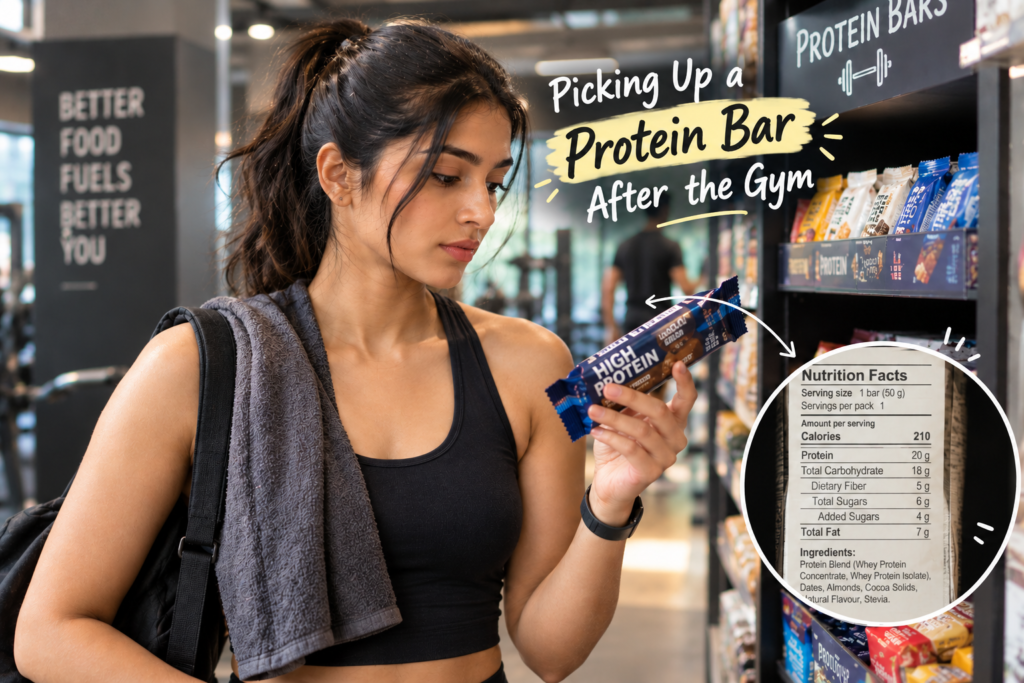
1. Picking Up a Protein Bar After the Gym
You’ve finished your workout.
You’re tired, hungry and looking for something quick.
You spot a protein bar that says “HIGH PROTEIN” in huge letters on the front. It looks like exactly what you need, so into the basket it goes.
Sound familiar?
This is one of those moments when the food label deserves a second look.
Protein is only one part of the picture
A product being high in protein doesn’t automatically tell you everything about it.
Take a few seconds to check the food label for:
- Protein per serving
- Serving size
- Added sugars
- Total carbohydrates
- Fat
- Calories
- Ingredients
The serving size is particularly easy to overlook.
A bar may look like one serving, while the nutritional information could be listed differently depending on the product.
The ingredient list can also tell you more about how that protein bar is made.
Maybe you’re choosing it because you want a convenient post-workout snack. That’s perfectly reasonable.
The point isn’t to turn a protein bar into a complicated nutritional calculation.
It’s simply to make sure the product matches what you think you’re buying.
The front of the pack catches your attention.
The food label helps you understand the product.
2. Grabbing Your Kid’s Favourite Packet Snack

Now comes a very different situation.
Your child has a favourite packet of biscuits, chips or another snack. You’ve bought it so many times that you probably don’t even think twice before picking it up.
After all, they’ve had it before.
But children’s food choices are often made repeatedly, which makes the food label worth checking from time to time.
“Favourite” doesn’t mean “understood”
You don’t have to ban every snack your child enjoys.
Instead, use the food label as a way to stay informed.
Check the ingredients and Nutrition Information. Look at serving sizes and understand what the product actually contains.
You may also come across claims such as:
- No added sugar
- Baked
- Natural
- Made with whole grains
- Source of vitamins
- High in fibre
These statements can be useful, but they don’t tell the entire story on their own.
The food label gives you the broader context.
And when you’re buying something regularly for your family, that extra awareness can be more useful than making a decision based only on the front-of-pack message.
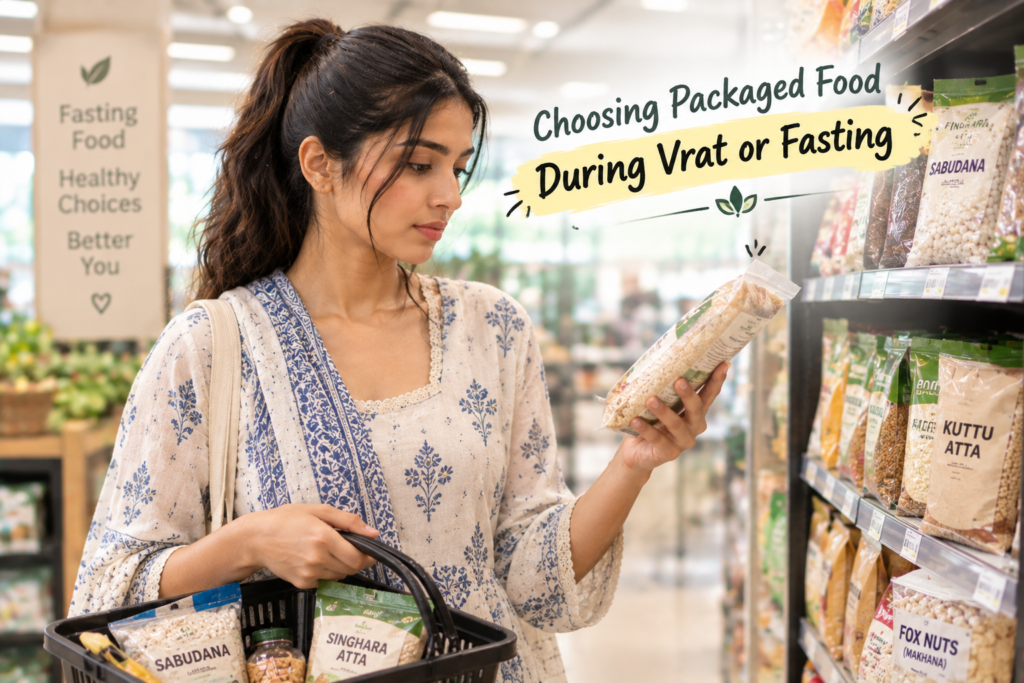
3. Choosing Packaged Food During Vrat or Fasting
Fasting can completely change the way someone looks at food.
An ordinary grocery trip can suddenly involve questions like:
“Can I have this?”
“Does this contain something I avoid during vrat?”
“Is this actually suitable, or does the packaging just make it look that way?”
This is another moment when the food label deserves a second look.
Don’t rely only on what the packet looks like
During fasting, people may follow different personal practices and avoid different foods.
That’s why assumptions can easily lead to the wrong choice.
Instead, check the ingredients and relevant product information on the food label.
If a product carries a relevant dietary certification, that can provide another useful reference point.
But certification and the food label serve different purposes.
The certification may tell you that a product meets a particular standard.
The label can help you understand what’s actually listed in the product.
Together, they can provide more useful information than simply trusting a product’s name or appearance.
And most importantly, different people may follow fasting practices differently.
There isn’t one universal checklist that applies to everyone.
The food label gives the consumer information; the individual decides what fits their practice.
Why Do We Skip the Food Label So Often?
The funny thing is, most people know that the food label contains useful information.
We just don’t always have the time or patience to read it.
There are a few familiar reasons.
We’re influenced by the front of the pack
Large claims and attractive packaging are designed to grab attention.
The back of the pack requires more effort.
We’re buying something we’ve bought before
Familiarity creates confidence.
If you’ve purchased something ten times, you may stop checking the food label.
We’re shopping in a hurry
When you’re ordering groceries between meetings or rushing through a supermarket, reading every detail isn’t always realistic.
We don’t know what to look for
Nutrition Information, ingredients, serving sizes and certifications can sometimes feel like too much information.
That’s why food awareness shouldn’t mean becoming an expert overnight.
It can simply mean knowing which information matters to you.
A Simple Way to Read a Food Label
You don’t need to spend five minutes studying every packet.
Try this simple approach.
1. Start with your reason for buying it
Ask yourself:
What am I looking for in this product?
It could be protein, a specific dietary preference, lower sugar, a particular certification or simply better understanding of the product.
2. Check the ingredients
The ingredients list gives you a clearer idea of what has gone into the product.
3. Look at Nutrition Information
Pay attention to serving size and the nutrients that are relevant to your needs.
4. Check relevant certification
If a dietary certification matters to you, look for it instead of relying only on assumptions or marketing language.
5. Then make your choice
The purpose of a food label isn’t to tell you what to buy.
It’s to give you information before you decide.
Food Labels, Certification and Better Food Transparency
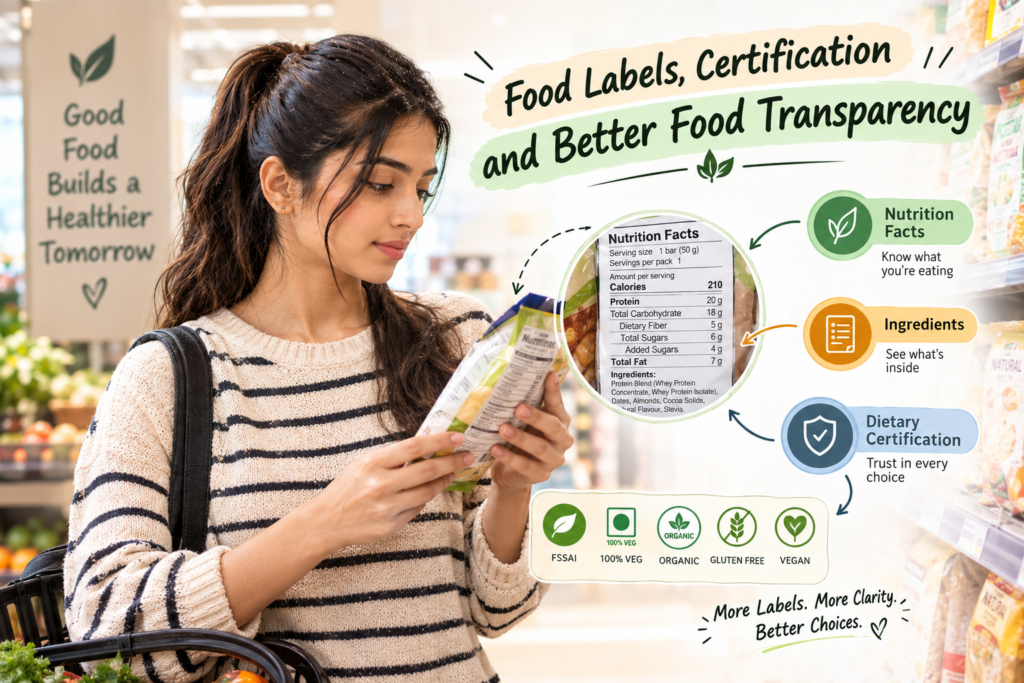
This is where food transparency becomes important.
A packaged product can communicate a lot through its packaging, but consumers often need more than one piece of information to understand what they’re choosing.
That’s why ingredients, Nutrition Information and food certification can work together.
A food label tells you about the product.
Certification can provide information about whether it meets a particular standard.
And the consumer brings their own preferences and requirements to the decision.
This is the bigger idea behind making food information easier to understand.
Not fear.
Not judgement.
Just clarity before the choice.
How Poorna Satya Makes This Information Easier to Access
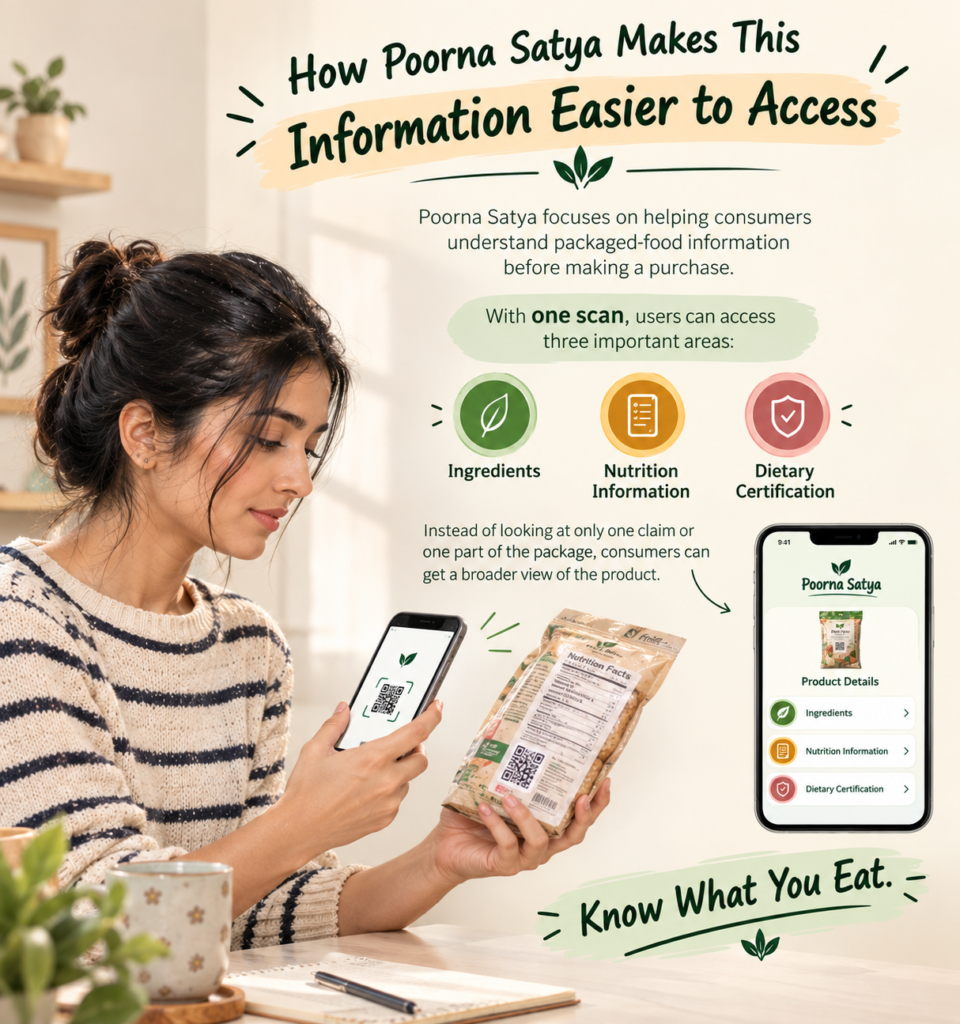
Poorna Satya focuses on helping consumers understand packaged-food information before making a purchase.
With one scan, users can access three important areas:
- Ingredients
- Nutrition Information
- Dietary Certification
Instead of looking at only one claim or one part of the package, consumers can get a broader view of the product.
The idea is simple:
Know What You Eat.
Because when the information is easier to understand, the choice can remain exactly where it belongs—with you.
Frequently Asked Questions About Food Labels
What is a food label?
A food label provides important information about a packaged product, including ingredients, Nutrition Information, serving size and other relevant product details.
Why should I read a food label?
Reading a food label can help you understand what you’re buying instead of relying only on packaging claims or assumptions. It can be particularly useful when a specific dietary requirement matters to you.
What should I check first on a food label?
Start with the information that matters to your specific choice. This could include ingredients, serving size, Nutrition Information, allergens or relevant dietary certification.
Is a food label enough to understand a product?
A food label provides important information, but certification, product claims and other relevant details can also help create a more complete picture.
Are “sugar-free” or “high-protein” claims enough?
Not necessarily. These claims highlight a specific characteristic of a product. The food label provides additional information that can help you understand the product more fully.
Can technology make food labels easier to understand?
Yes. Food-awareness platforms can bring ingredients, Nutrition Information and dietary certification together, making relevant information easier to access while shopping.
Conclusion: Maybe the Label Was Worth Those Extra 10 Seconds
Most of us aren’t going to stand in a supermarket aisle and read every word on every packet.
And we don’t need to.
But there are certain moments when those extra few seconds can make a real difference.
When you’re choosing a protein bar after the gym.
When you’re buying your child’s favourite snack.
When you’re shopping for a parent managing diabetes.
When you’re choosing packaged food during a fast.
Or when a dietary preference matters at a wedding celebration.
These are the moments when the food label deserves a second look.
Because the goal isn’t to make food choices complicated.
It’s to make them informed.
So next time a packet catches your eye, turn it around before putting it in your cart.
Check the ingredients.
Look at the Nutrition Information.
Understand the relevant certification.
Then make the choice that works for you.
Know What You Eat.
for more information dofollow :/https://poornasatya.com/
