When people hear food certification, the first thought is often connected to religion or belief-based food choices.
But that is only one part of the picture.
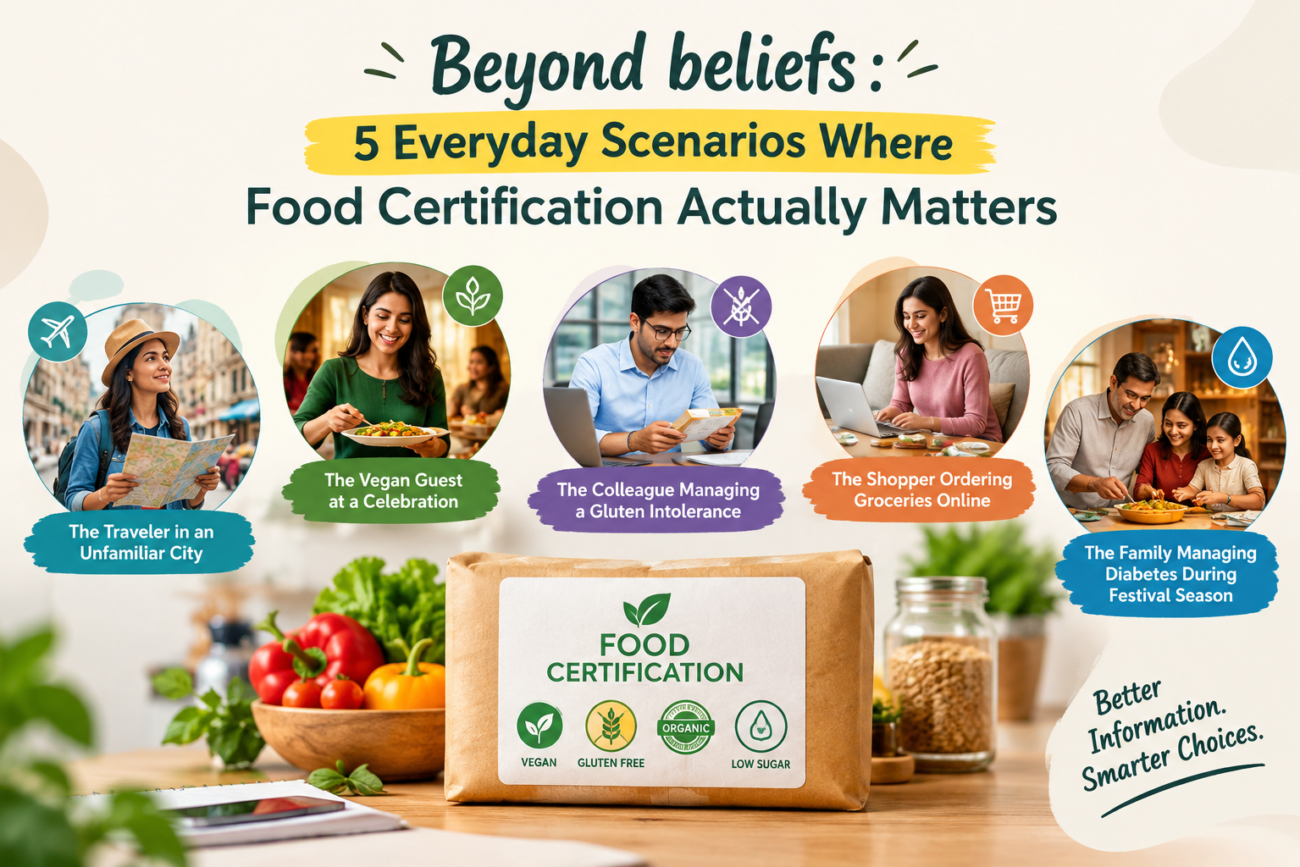
Think about the everyday situations where food choices can become slightly complicated. You are travelling in a new city and don’t know which products fit your preferences. You are invited to a celebration where a vegan guest needs something suitable to eat. Your colleague is avoiding gluten. You are ordering groceries online and trying to understand what a product actually contains. Or your family is trying to make more mindful food choices during festival season while managing diabetes.
None of these situations are unusual.
And this is where food certification can become useful.
A certification can provide specific information about a product based on a defined standard. It does not tell everyone what they should eat. Instead, it can help people understand whether a product may fit their own dietary requirements or preferences.
In a world where packaged food comes with countless claims, labels and marketing messages, that extra clarity matters.
Here are five everyday situations that show why food certification is about much more than religion.
1. The Traveler in an Unfamiliar City
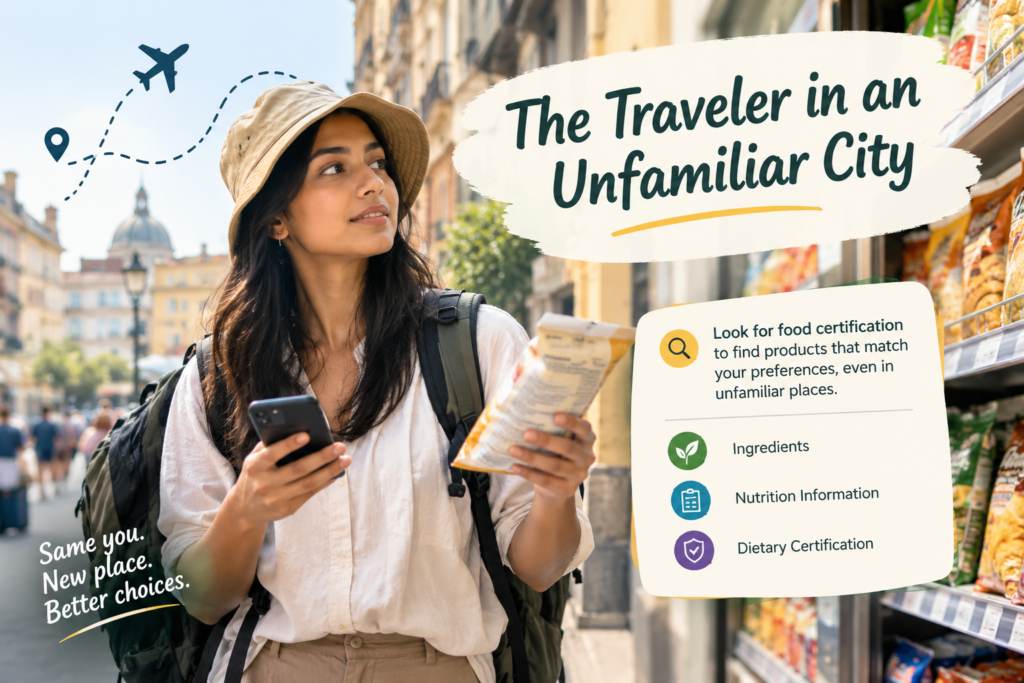
Travelling is exciting until it is time to figure out what to eat.
When you’re in a city you’ve never visited before, you may not know the local brands, restaurants or packaged food products. Even something that looks familiar may have different ingredients or certifications from what you normally buy at home.
Imagine someone walking into a supermarket during a trip.
There are dozens of snacks, ready-to-eat meals and beverages on the shelf. The packaging looks attractive, but the person wants to make sure the product matches their dietary preference.
This is where food certification can make the decision a little easier.
Information matters when familiarity disappears
At home, you may already know which brands and products work for you.
While travelling, that familiarity disappears.
A relevant food certification can act as an additional point of information when comparing unfamiliar products. Instead of relying completely on assumptions, travellers can look at the certification along with the ingredients and Nutrition Information.
The idea isn’t to make food choices stressful while travelling.
It is actually the opposite.
Better information can make unfamiliar choices feel more manageable.
2. The Vegan Guest at a Celebration

Now imagine you’re hosting a celebration.
You’ve ordered snacks, desserts and meals for everyone. Then you find out that one of your guests follows a vegan lifestyle.
The obvious reaction might be, “We’ll just find something without milk.”
But food choices aren’t always that simple.
A product may appear plant-based from its packaging while still requiring a closer look at its ingredients and relevant certification.
This is another situation where food certification can be useful.
Don’t make people guess what is suitable
When you’re hosting people with different dietary preferences, the goal isn’t to create separate rules for everyone.
It’s to provide enough information so people can make their own choices comfortably.
A relevant dietary certification can help a vegan guest identify products that align with their requirements. They can still check the ingredient list and other information, but certification gives them another useful reference point.
This is especially helpful at celebrations where people are trying several unfamiliar packaged foods.
A little transparency can make a guest feel more comfortable without making their food preference the centre of attention.
3. The Colleague Managing a Gluten Intolerance
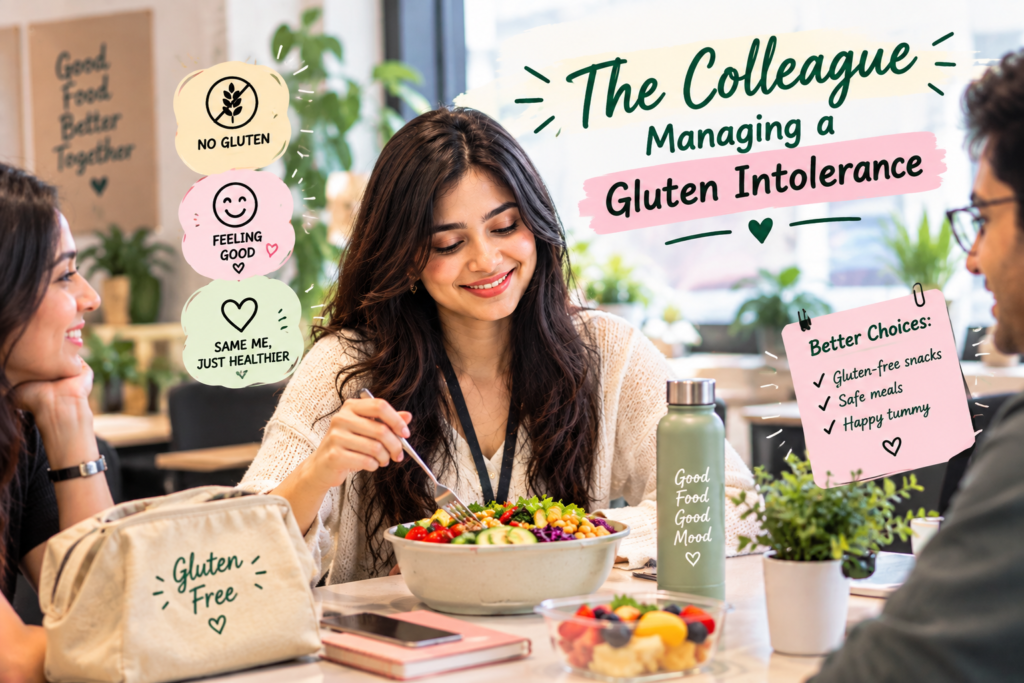
Consider a workplace situation.
A team orders biscuits, cakes and snacks for a meeting. Everyone is helping themselves, but one colleague needs to avoid gluten.
For most people, choosing a snack may take a few seconds.
For that colleague, the decision may involve checking ingredients, allergen information and relevant food certification.
This is where assumptions can become a problem.
“Looks safe” isn’t the same as knowing
Packaging can sometimes give consumers an impression before they read the details.
A product might have words like “healthy,” “natural” or “light” prominently displayed. But those words don’t necessarily answer whether the product meets a particular dietary requirement.
For someone looking for gluten-free food, relevant certification or clear product information can be much more meaningful.
That doesn’t mean certification replaces the label.
It doesn’t.
Consumers should still check the ingredients, allergen information and other relevant details.
But food certification can provide another layer of clarity when a specific dietary requirement matters.
And in a workplace or social setting, that information can make it easier for everyone to participate without having to explain their food choices repeatedly.
4. The Shopper Ordering Groceries Online
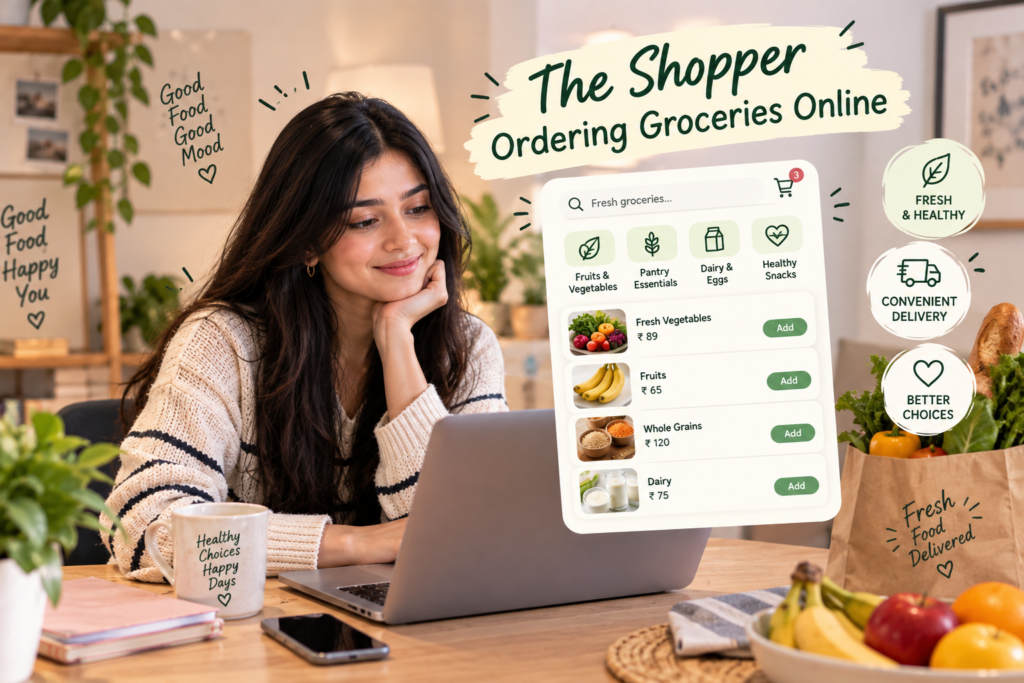
This might be one of the most relatable scenarios today.
You open a grocery delivery app, search for snacks and suddenly have hundreds of products on your screen.
Unlike a supermarket, you can’t always hold the packet in your hand and turn it around to read every part of the label.
You’re looking at product photos, descriptions, claims and sometimes a limited amount of nutritional or ingredient information.
So how do you decide?
This is where food certification can become particularly useful in online grocery shopping.
Online convenience should not mean less information
Shopping online is convenient, but convenience shouldn’t come at the cost of transparency.
When a shopper has a specific dietary preference, being able to identify relevant food certification information can make product comparison easier.
For example, someone searching for vegan or gluten-free products may want to quickly identify products that meet the relevant certification or standard before spending time comparing them.
The same principle applies to other dietary certifications.
The more accessible the information is, the easier it becomes to make an informed choice.
And that is really what food transparency is about.
Not overwhelming consumers with information.
Making the right information easier to find.
5. The Family Managing Diabetes During Festival Season

Festivals are often associated with food.
Sweets, snacks, family meals and special treats can appear everywhere.
For a family managing diabetes, however, festival food may require a little more thought.
This doesn’t necessarily mean avoiding every celebration or saying no to every traditional favourite.
It can simply mean paying closer attention to what is being eaten.
This is where food certification and complete product information can help support more informed choices.
Look beyond the “sugar-free” claim
During festival season, shoppers may come across products promoted as “sugar-free,” “low sugar” or “diabetic-friendly.”
But a claim on the front of the pack shouldn’t be the only thing influencing the decision.
Look at the Nutrition Information.
Check the ingredients.
Understand the serving size.
And where relevant, consider the product’s certification.
A food certification related to a particular dietary requirement can provide useful context, but it should be considered alongside the complete product label.
For families making food choices around diabetes, the bigger goal is awareness rather than fear.
Food information should help people understand their options, not make them feel guilty about every choice.
Food Certification Is About Choice, Not Instructions
These five scenarios have something important in common.
None of these people necessarily need someone else to decide what they should eat.
The traveller wants information about an unfamiliar product.
The vegan guest wants to know whether something fits their lifestyle.
The colleague avoiding gluten needs relevant information before choosing a snack.
The online shopper wants to compare products more easily.
The family managing diabetes wants to understand the food they are buying.
In each case, food certification can contribute to a clearer decision.
That is why it is useful to look at food certification as part of a larger food-awareness journey rather than treating it as just a symbol on a package.
How to Look at Food Certification More Smartly
The next time you buy packaged food, don’t rely on just one thing.
Look at the bigger picture.
Start with what matters to you
Your food choice could be influenced by:
- Dietary preferences
- Lifestyle choices
- Allergies or intolerances
- Nutrition goals
- Specific dietary certifications
- Personal food requirements
Once you know what matters to you, relevant food certification becomes easier to understand.
Check three important pieces of information
Before buying a packaged product, look at:
1. Ingredients
Understand what has gone into the product.
2. Nutrition Information
Look beyond front-of-pack claims and understand the nutritional profile.
3. Dietary Certification
Check whether a relevant certification supports the dietary requirement or preference you’re considering.
Together, these three areas can give you a more complete picture.
Where Poorna Satya Fits Into This
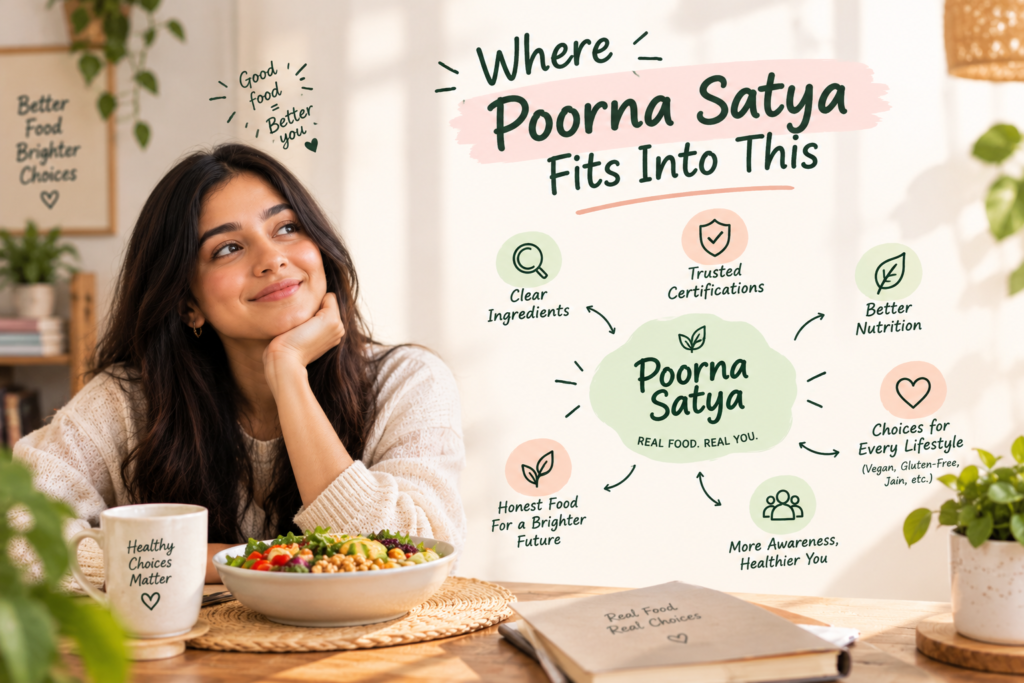
Poorna Satya is built around making packaged-food information easier to understand.
With one scan, consumers can access three important pieces of information:
- Ingredients
- Nutrition Information
- Dietary Certification
This approach brings food certification into the wider context of food transparency.
Because knowing whether a product fits your preference is only one part of the decision.
Understanding what is actually in the product, its nutritional information and its relevant certification gives you a clearer picture before you buy.
The purpose isn’t to tell you what to choose.
It’s to help you Know What You Eat and make the choice that feels right for you.
Frequently Asked Questions About Food Certification
What is food certification?
Food certification is an indication that a product, ingredient, process or facility has met specific requirements under a particular certification system or standard. The exact requirements depend on the certification.
Is food certification only related to religion?
No. Food certification can also be relevant to dietary and lifestyle preferences such as vegan, organic or gluten-free choices. Its relevance depends on the specific certification and what it covers.
Why is food certification useful while travelling?
When travelling, consumers may encounter unfamiliar brands and products. Relevant food certification, along with ingredients and Nutrition Information, can provide useful information when making food choices.
Does food certification replace checking ingredients?
No. Food certification should not be treated as a replacement for reading the product label. Ingredients, Nutrition Information, allergen declarations and other relevant details should also be considered.
Can food certification help with online grocery shopping?
Yes. Food certification can make it easier to identify products that may match specific dietary preferences when shoppers are comparing products online.
How does food certification support informed food choices?
Food certification can provide information connected to a particular standard or dietary requirement. When combined with ingredients and Nutrition Information, it can help consumers make decisions based on their own needs and preferences.
Conclusion: Sometimes, One Detail Can Make the Choice Easier
Food choices happen everywhere.
In a supermarket you’ve never visited before.
At a friend’s celebration.
Around the office snack table.
On a grocery delivery app.
And around the festival dinner table.
The situations may look completely different, but the need is often the same: clear information before making a choice.
That is where food certification can matter.
It doesn’t decide what is right for you.
It doesn’t replace the complete food label.
And it isn’t limited to one type of consumer.
It is simply one useful piece of information that can help people understand whether a product fits their own dietary preferences and requirements.
So the next time you pick up a packaged product, look beyond the front of the pack.
Check the ingredients.
Look at the Nutrition Information.
Understand the relevant food certification.
Because when food choices are personal, information should be personal too.
Know What You Eat. Choose What Works for You.
for more much information dofollow:https://poornasatya.com/
