

For someone living with diabetes, everyday food choices can sometimes become confusing. Dairy is one such topic. While milk and other dairy foods are common in many diets, people often wonder whether their natural sugar content can affect blood glucose levels.
The simple answer is that people with diabetes do not necessarily need to avoid dairy. What matters is understanding its nutritional content and how it fits into their daily diet.
Let’s look at what the connection between Dairy and Diabetes actually means.
Understanding How Dairy Consumption Affects Diabetes

Dairy contains carbohydrates, protein and fat. Carbohydrates are particularly important for people with diabetes because they are broken down into glucose during digestion.
This does not make dairy unhealthy or unsuitable. It simply means that its carbohydrate content should be considered as part of the overall diet.
The quantity consumed and the nutritional composition of a meal can also influence blood sugar levels.
The Role of Lactose and Natural Sugars in Blood Glucose

Milk naturally contains a sugar called lactose. During digestion, the body breaks it down into simpler sugars that can be absorbed into the bloodstream.
Since lactose is a carbohydrate, it can contribute to an increase in blood glucose.
It is also worth understanding the difference between natural and added sugars. Natural sugars are already present in food, whereas added sugars are introduced during processing or preparation.
This distinction is useful when understanding Dairy and Diabetes, as avoiding added sugar does not necessarily mean avoiding all carbohydrates.
Does Dairy Consumption Increase Blood Sugar Levels?

Dairy can affect blood sugar, but the response varies from person to person. The quantity consumed, overall meal composition, physical activity and individual metabolism all play a role.
For people managing diabetes, a few things are worth remembering:
- Larger portions may mean higher carbohydrate intake.
- Other foods eaten alongside dairy can influence the overall meal response.
- Medication, activity levels and individual insulin response can affect blood glucose.
There is no single response that applies to everyone. Paying attention to personal nutritional needs is more useful than following general food restrictions.
Understanding the Nutritional Needs of People with Diabetes

Managing diabetes involves more than simply reducing sugar. The body still needs a balanced supply of nutrients to maintain energy and overall health.
Protein supports muscle maintenance, calcium contributes to bone health, and vitamins and minerals help the body perform essential functions.
This is why completely removing a food group without understanding its nutritional value may not be the best approach.
A balanced diet should consider overall nutrition, carbohydrate intake and individual health requirements.
What Should People with Diabetes Look for on Food Labels?
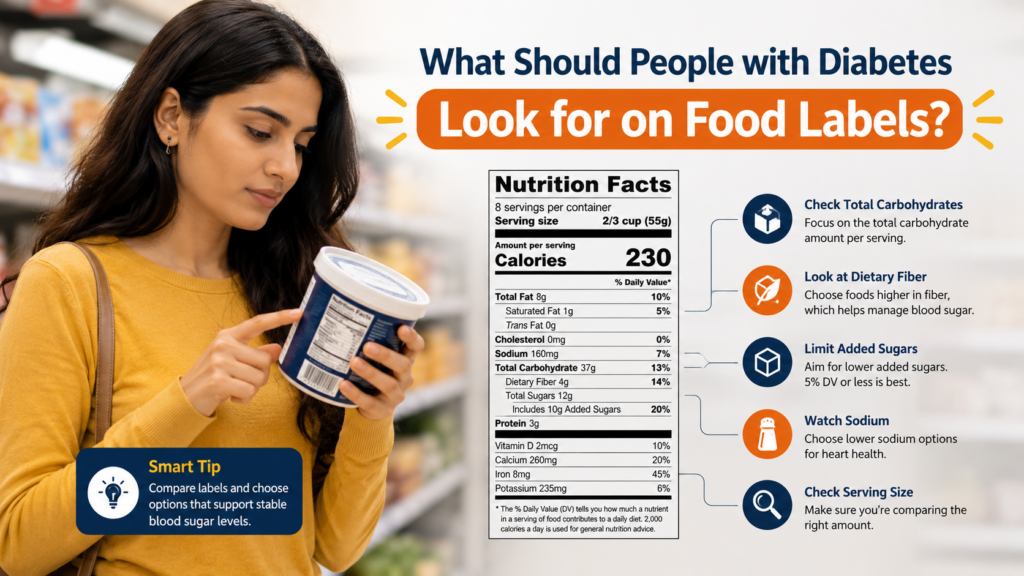
When it comes to Dairy and Diabetes, understanding food packaging and knowing what to look for can make a difference.
People managing diabetes should pay attention to:
- Total carbohydrates: Helps understand the carbohydrate content per serving.
- Total sugars: Shows the overall amount of sugar present.
- Added sugars: Identifies sugar introduced during processing.
- Serving size: Helps calculate how much is actually being consumed.
- Ingredients: Provides information about the components used in the food.
Terms such as sugar-free and low-fat do not always tell the complete nutritional story. Reading the full label is a better way to understand what you are buying and make informed dairy choices.
How to Make Better Dietary Choices with Diabetes

Managing diabetes doesn’t mean giving up the foods you enjoy or following a strict diet every day. It is more about understanding your body’s needs and making sensible food choices. When it comes to Dairy and Diabetes, paying attention to portion sizes and daily carbohydrate intake can help you maintain a better balance in your diet.
Here are a few simple things to keep in mind:
- Be mindful of portions- Even nutritious foods can contribute to excess calorie or carbohydrate intake when consumed in large quantities. Paying attention to serving sizes can help maintain balance.
- Read nutritional information- Don’t rely only on claims like sugar-free or low-fat. Check total carbohydrates, sugars and serving sizes to get a clearer picture of what you are consuming.
- Maintain a balanced diet-Your meals should provide a variety of nutrients, including protein, fibre, vitamins and minerals. Avoid unnecessarily removing entire food groups without understanding their nutritional value.
- Pay attention to your body’s response- Blood glucose levels can respond differently to the same food in different individuals. Following your healthcare professional’s advice on monitoring can help you understand your own patterns.
- Avoid following random diet advice- Not every diet trend or food restriction is suitable for people with diabetes. Your nutritional needs may depend on your age, lifestyle, medication and overall health.
If you are unsure about making changes to your eating habits, a registered dietitian or healthcare professional can help you develop a balanced meal plan that suits your individual needs.
Common Misconceptions About Dairy and Diabetes

There is a lot of confusion around dairy consumption and diabetes. Let’s clear up some common misconceptions:
- People with diabetes must avoid all dairy: This is not true. Dairy does not automatically need to be removed from the diet. What matters is its nutritional content, portion size and how it fits into an individual’s meal plan.
- Natural sugars do not affect blood glucose: Natural sugars can also raise blood glucose levels. For example, lactose, naturally present in milk, contributes to the body’s carbohydrate intake.
- Sugar-free means carbohydrate-free: Not necessarily. A food may contain no added sugar but still have naturally occurring sugars and other carbohydrates. This is why checking total carbohydrates is important.
- Everyone with diabetes should follow the same diet: Diabetes affects people differently. Age, lifestyle, medication and individual health conditions can influence nutritional requirements. A suitable eating plan should be based on personal needs rather than general advice.
How Poorna Satya Helps Consumers Make Informed Food Choices

Understanding packaged food is not always easy, especially when exploring topics like Dairy and Diabetes. Nutritional information, ingredients and dietary certifications are often presented in different sections of the packaging.
Poorna Satya brings these three information categories together in one scan: Ingredients, Nutrition Information and Dietary Certifications.
This helps consumers explore packaged food details and make choices based on better information. While it does not replace medical or dietary advice, it encourages greater awareness of what goes into everyday food.
Conclusion
People with diabetes do not necessarily have to give up dairy. The important thing is to understand its carbohydrate content, pay attention to portion sizes and consider individual nutritional requirements.
The relationship between Dairy and Diabetes is not about following unnecessary restrictions. It is about understanding food better and making choices that support a balanced lifestyle.
Know what you eat.
for more content do follow: https://poornasatya.com/
