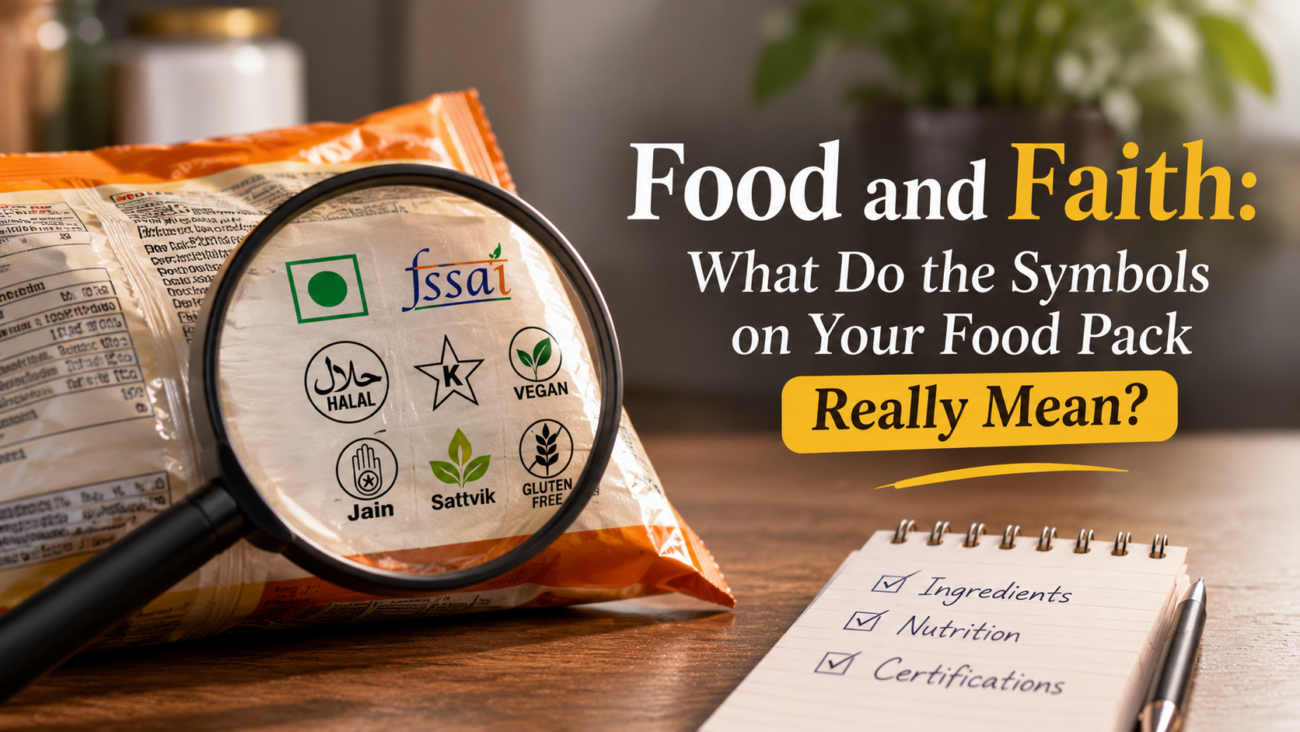
Food is more than something we eat every day. For many people, it is connected to their beliefs, personal preferences, family traditions, and way of life. This is where food and faith come together. What one person chooses to eat may be different from what another person prefers, and both choices deserve to be understood and respected.
Think about the last time you picked up a packaged food product. You probably noticed its name, flavour, price, or attractive packaging. But did you look at the symbols printed on it? For someone who makes decisions based on food and faith, these small symbols can make a meaningful difference.
Food labels provide useful information, but understanding what they actually mean is equally important. Let’s explore how food labels, dietary certifications, and personal beliefs connect with everyday food choices.
1. Food and Faith: Why Do Our Food Choices Differ?
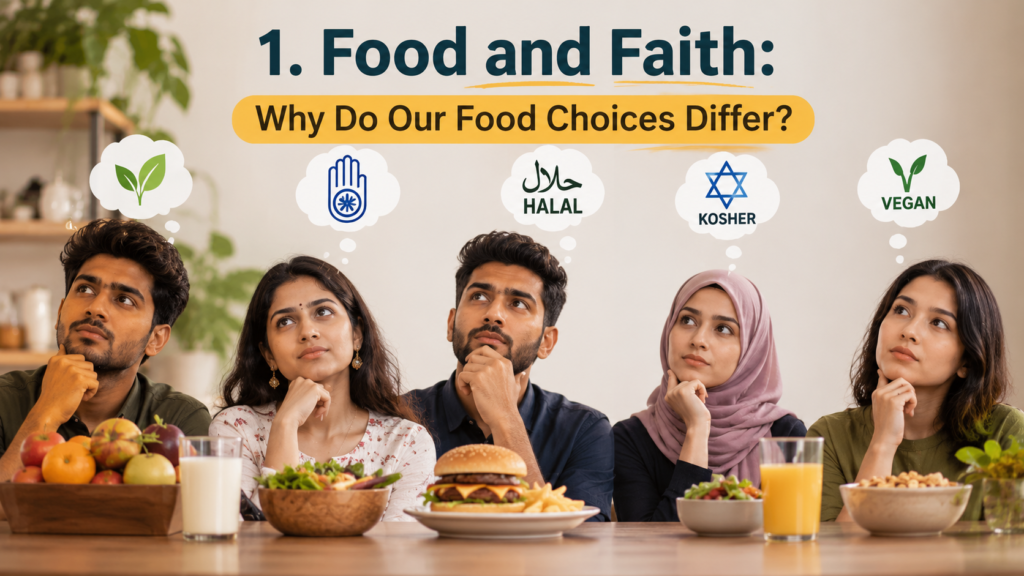
Have you ever wondered why two people can look at the same food product and make completely different decisions?
The answer often lies in their individual preferences and beliefs. Some people follow specific dietary practices because of their faith. Others prefer particular foods because of their lifestyle, personal values, or dietary requirements.
This is why food and faith can be such a personal subject. There is no single reason why everyone chooses what they eat. For some, it is about following religious dietary guidelines. For others, it may involve choosing vegetarian or vegan products, avoiding certain ingredients, or looking for specific certifications.
For example, a person following Jain dietary practices may look for products that meet their particular dietary requirements. Someone else may look for Halal or Kosher certification. A vegan consumer may want to know whether a product meets vegan standards.
These choices are personal, and understanding them begins with access to clear information.
2. What Do Green and Brown Symbols on Food Packs Mean?
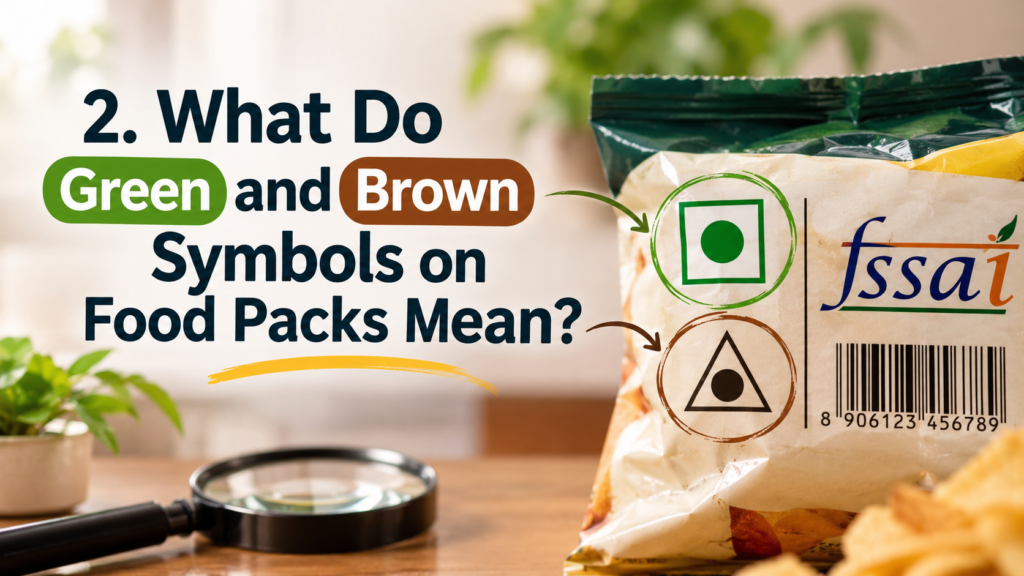
In India, packaged food labels use specific symbols to indicate whether a food product is vegetarian or non-vegetarian.
The green symbol indicates vegetarian food, while the brown symbol indicates non-vegetarian food. These symbols help consumers identify a product’s broad category without having to read every detail on the packaging.
For people exploring food and faith, these symbols can be an important first step. They offer a quick visual clue when choosing a product.
However, it is important to understand what these symbols communicate—and what they do not.
A vegetarian symbol does not automatically mean that a product meets every individual’s dietary or faith-based requirements. Similarly, a product’s broad food category does not tell you everything about its certification status.
The symbol gives you one piece of information. Depending on your preferences, you may need to look at other details before deciding whether the product suits you.
3. When One Symbol Doesn’t Answer Every Question
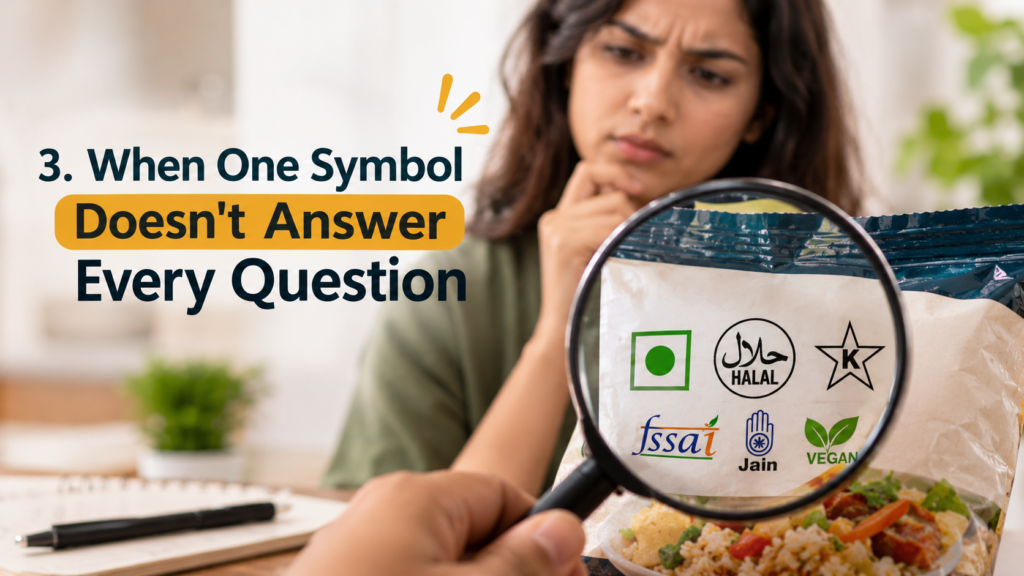
Imagine picking up a packet of biscuits at a supermarket. You notice the green vegetarian symbol, so you know the product is classified as vegetarian.
But what if you also want to know whether it carries a particular dietary certification?
The vegetarian symbol alone may not answer that question. You may need to check the packaging for additional certification information.
This is where food and faith becomes more than a conversation about vegetarian and non-vegetarian food. It also involves understanding the different information available on a product and knowing which details matter to you.
For one consumer, the vegetarian symbol may provide enough information. Another consumer may want to check ingredients, nutritional values, or a specific dietary certification.
Neither approach is the same for everyone. The important thing is having access to the information needed to make a personal choice.
4. Understanding Dietary Certifications on Packaged Food
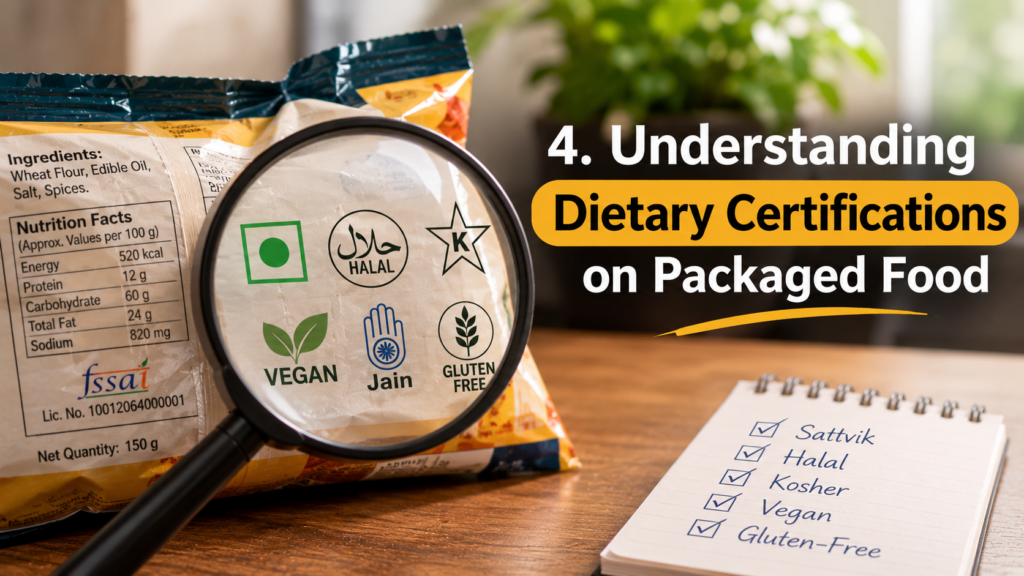
Dietary certifications help communicate whether a product meets particular standards or requirements. However, different certifications serve different purposes, so their meanings should not be treated as interchangeable.
Here are a few examples:
- Sattvik Certification: Associated with specific Sattvik food standards and requirements.
- Halal Certification: Indicates that a product has been assessed against the requirements of the relevant Halal certification scheme.
- Jain Certification: May help consumers identify products assessed against particular Jain dietary requirements.
- Kosher Certification: Indicates that a product meets the requirements of the relevant Kosher certification authority.
- Vegan Certification: Can help identify products assessed against the requirements of a particular vegan certification scheme.
- Gluten-Free Certification: Can help consumers identify products assessed against specified gluten-free requirements.
The exact meaning and scope of a certification depend on the relevant standard and certifying organisation.
For people interested in food and faith, these distinctions matter because a certification associated with one set of requirements may not address another person’s needs.
It is also worth remembering that not every product carries a dietary certification. The absence of a certification logo does not, by itself, establish that a product is unsuitable for a particular consumer.
5. A Certification Logo Is a Starting Point, Not the Whole Story
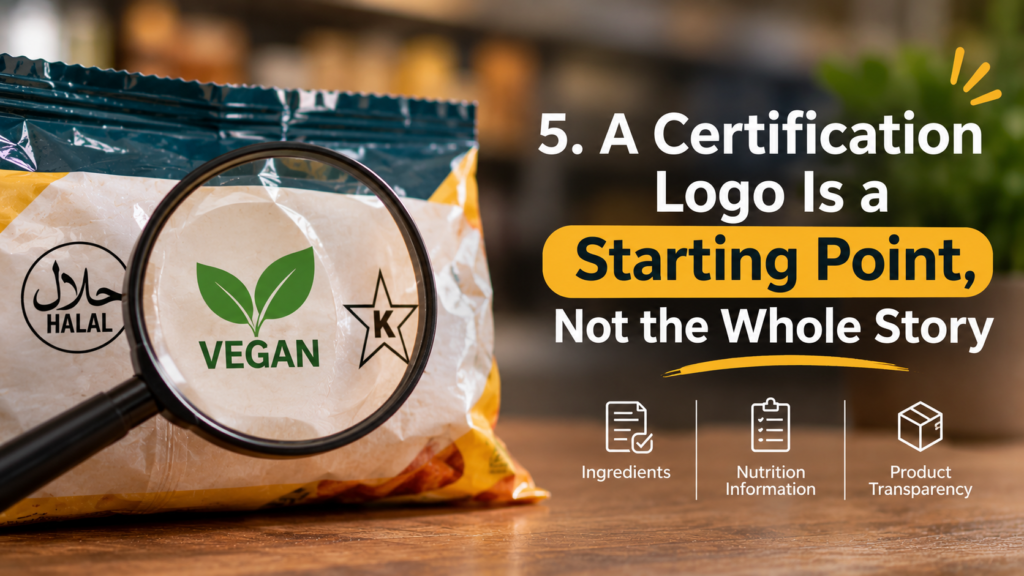
A logo on a packet can catch your attention, but understanding it requires more than recognising its appearance.
When making choices related to food and faith, consumers may want to know what a certification represents, which organisation issued it, and what standards were considered.
Different certification schemes may have different requirements, assessment processes, and scopes. Therefore, two logos should not automatically be assumed to mean the same thing.
If a product displays a certification mark, consumers can look for supporting information on the packaging or consult the relevant certification organisation when further clarification is needed.
The goal is not to make food choices complicated. It is to make the available information easier to understand, so people can decide what works for them.
6. What Can Food Labels Actually Tell You?
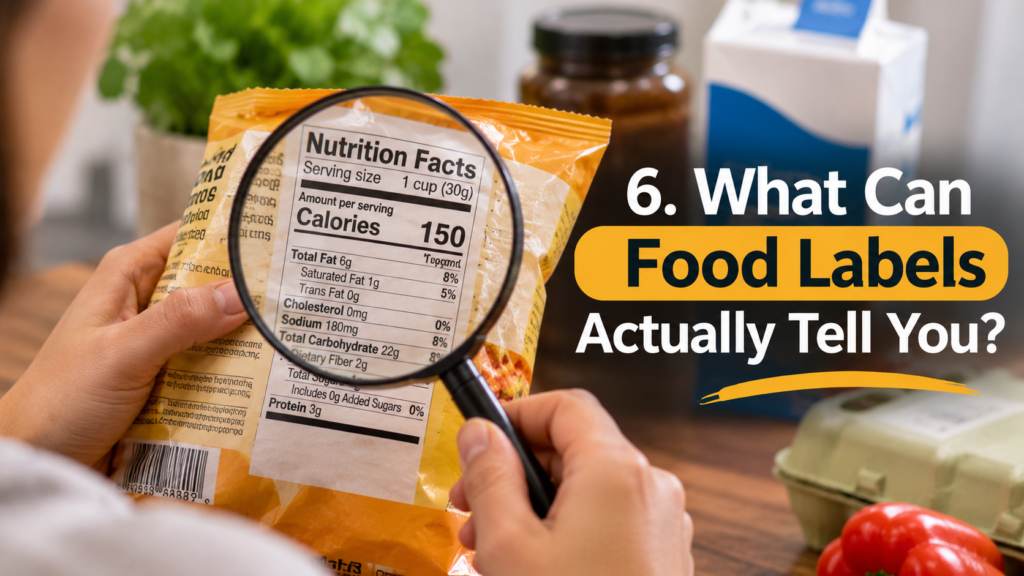
Food packaging contains several kinds of information, and each serves a different purpose.
The ingredients list tells you which ingredients are used in the product. Nutrition information provides details such as energy, protein, carbohydrates, sugar, fat, and other nutrients, depending on the label.
Vegetarian and non-vegetarian symbols communicate the product’s broad dietary classification. Dietary certification marks, where present, relate to the requirements of the relevant certification scheme.
Marketing statements, meanwhile, are intended to highlight particular product features. They should not be confused with nutritional information or certification.
For anyone exploring food and faith, understanding these differences can make everyday decisions easier. Instead of relying on one symbol or one statement, consumers can consider the information that is relevant to their needs.
Reading a label does not have to mean analysing every word on a packet. Sometimes, it simply means knowing where to look when a particular question comes to mind.
How Poorna Satya Supports Informed Food Choices
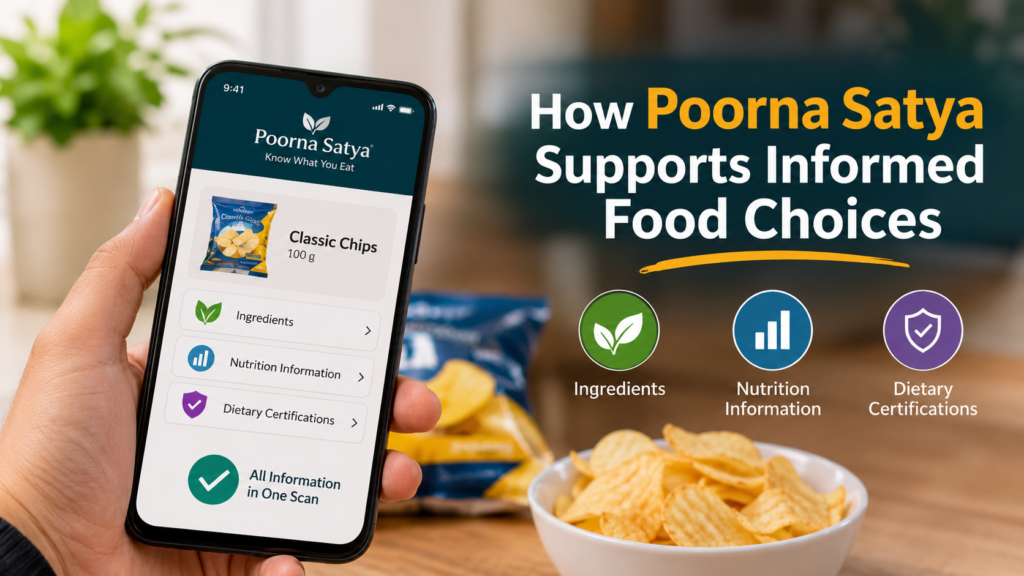
Finding information on food packaging can sometimes feel confusing, especially when different details are printed in different places.
Poorna Satya aims to make packaged-food information easier to access through a single scan. It brings together three key information layers:
- Ingredients: Understand which ingredients are listed on the product.
- Nutrition Information: Explore the nutritional details available for the product.
- Dietary Certifications: Access relevant certification information where available.
For consumers navigating food and faith, having these information layers together can make it easier to explore a product before making a decision.
The idea is not to tell people what they should eat. It is to help them access information that may matter to their individual preferences and requirements.
Whether someone is checking a certification, comparing nutrition information, or simply trying to understand a food label, better access to information can support a more informed choice.
Food and Faith: Your Choices, Your Information
Everyone has their own relationship with food. Our choices may be influenced by personal beliefs, dietary preferences, family practices, lifestyle, or nutritional needs.
That is what makes food and faith an important part of understanding food transparency. The same product may answer one person’s questions while leaving another person looking for more information.
Food labels and dietary certifications can help, provided we understand what each one communicates. Taking a moment to explore the available information can make the decision-making process clearer.
Ultimately, informed food choices are personal. What matters is having access to relevant information and the freedom to decide what suits you.
Poorna Satya – Know What You Eat.
For more content do follow:https://poornasatya.com/
