How often do you pick up a packet of food and decide within a few seconds whether to buy it?
You might notice the brand first. Then perhaps a “healthy” claim, an attractive picture, or a familiar certification mark. If everything looks right, the product goes into the cart.
But there is one question that often gets missed:
Does this product actually fit the way you choose to eat?
Food is personal. What feels like the right choice for one person may not be the right choice for another. Some people pay close attention to ingredients or nutrition. Others may follow dietary practices or look for certifications such as Sattvik, Halal, Kosher, Vegan, Organic, or Gluten-Free.
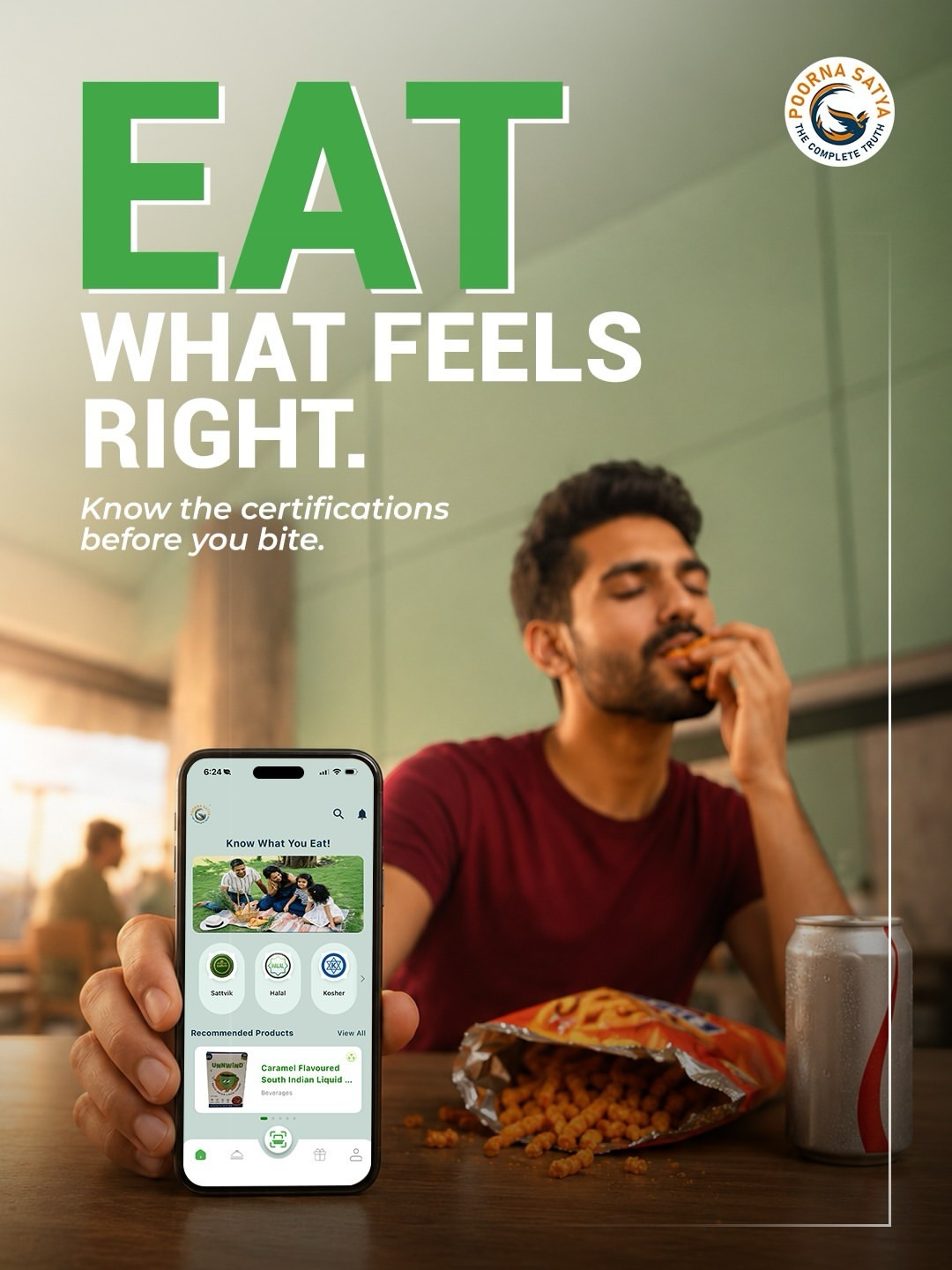
That is why understanding the information on a food package matters and eat what feels right.
A certification can tell you something important about a product—but only if you know what that certification actually represents.
Eat what feels right. Just know what you’re choosing before you bite.
One Packet, Different Priorities
There is no single checklist that defines the “right” food for everyone.
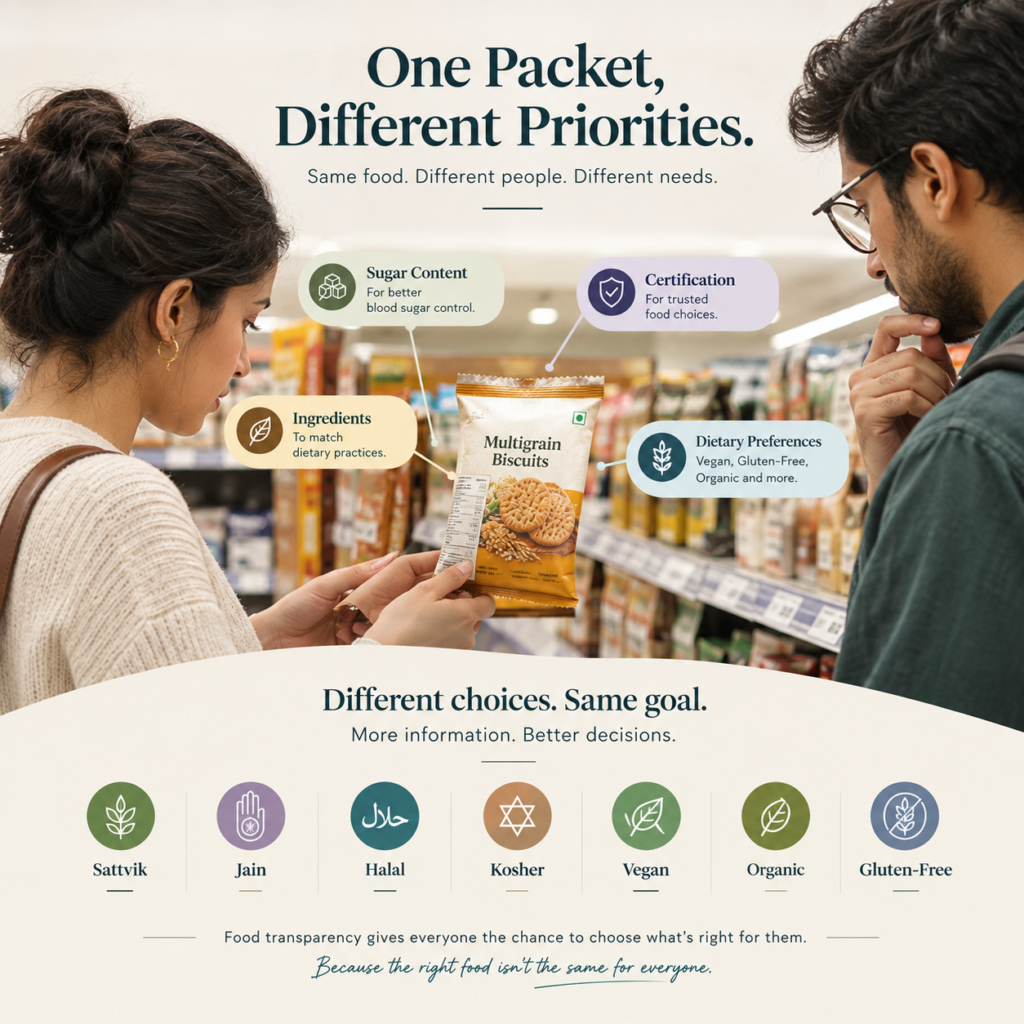
Imagine two people standing in the same supermarket aisle, looking at the same packet of biscuits. One may be checking the sugar content. Another may be looking for a particular certification. Someone else may be checking the ingredients to make sure they fit their dietary preferences.
All three are looking at the same product, but they may be looking for completely different information. Their priorities are simply different.
For some consumers, Sattvik products may matter. Others may follow Jain dietary practices or look for Halal or Kosher certification. Some may prefer Vegan, Organic, or Gluten-Free products.
These choices can be shaped by lifestyle, dietary preferences, personal preferences, or the way someone chooses to approach food.
This is where food transparency becomes important.
Instead of expecting every food product to be “right” or “wrong,” consumers should have access to enough food information to understand what they are buying and decide what fits their own preferences. Eat What Feels Right is not about following one fixed definition of the “right” food. It is about having the clarity to understand the product and choose what feels right for you.
The better question isn’t always:
“Is this food good?”
Sometimes, it is:
“Is this food right for me?”
A Certification Is More Than a Symbol on the Pack
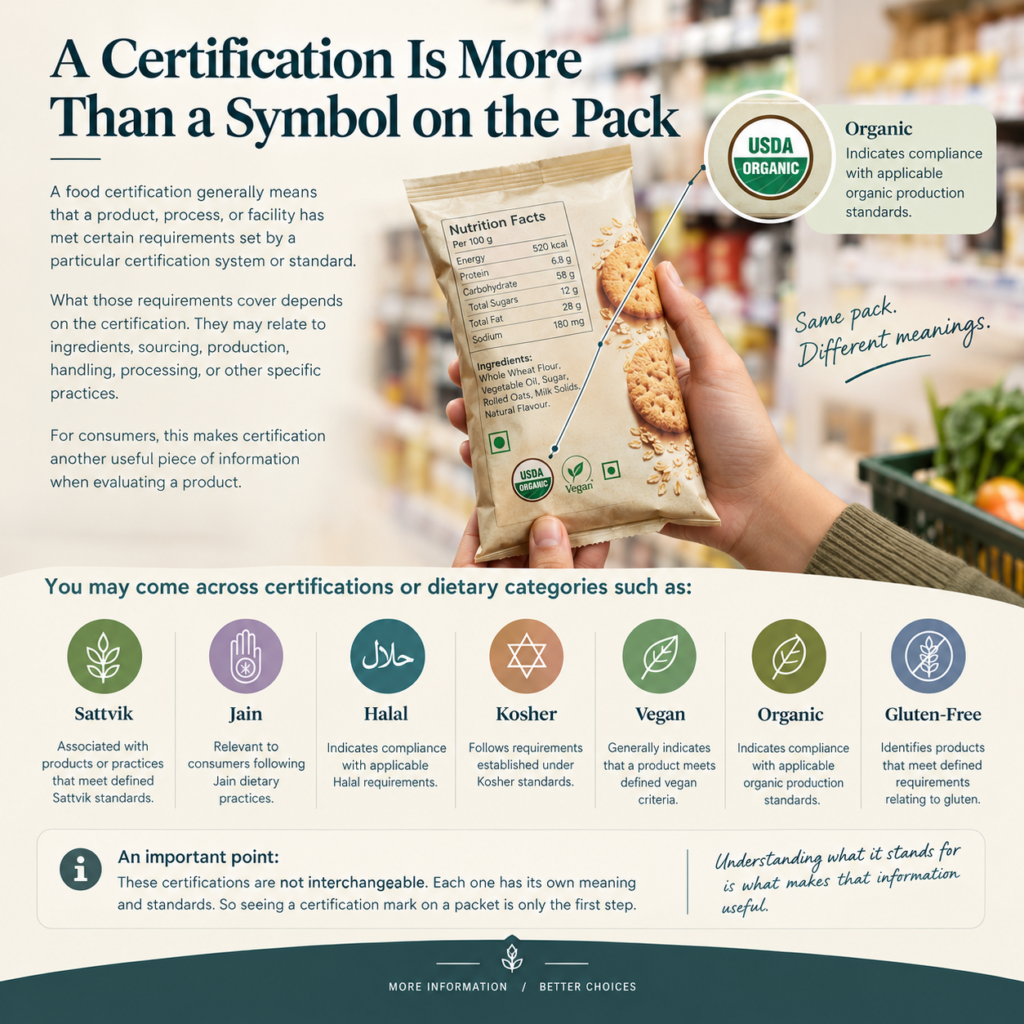
A food certification is more than just a symbol printed on a food package. It represents a set of requirements that a product, process, or facility has met under a particular certification system or standard.
What that certification covers can vary. It may relate to the ingredients used, how a product is made or handled, the production process, or other requirements defined by that certification.
For consumers, this information can provide transparency about what a product contains beyond its marketing claims. It can be especially useful when a particular dietary preference or lifestyle influences what they choose to buy.
Different certifications and dietary categories can answer different questions for different consumers:
Sattvik – Sattvik refers to a pure, light, and healthy dietary and lifestyle concept in Ayurveda, can be relevant to consumers looking for products that align with defined Sattvik standards or preferences.
Jain – The Jain diet is a strict, spiritually motivated vegetarian diet based on absolute non-violence (Ahimsa) can be relevant to consumers who follow Jain dietary practices and want food information that aligns with those preferences.
Halal – Halal refers to what is permissible or lawful under Islamic law as defined in the Qurancan help consumers identify products that meet applicable Halal requirements.
Kosher – Jewish dietary regulations (Kashrut) completely prohibits the mixing of meat and dairy products. can help consumers identify products that meet requirements established under Kosher standards.
Vegan – Veganism is a lifestyle and diet that seeks to exclude all forms of animal exploitation and cruelty. can help consumers identify products that meet defined vegan criteria.
Organic – Organic refers to food produced using ecological and natural farming practices without synthetic chemicals. It strictly prohibits synthetic pesticides, artificial fertilizers, irradiation, and genetically modified organisms (GMOs) can indicate that a product meets applicable organic production standards.
Gluten-Free – Gluten-free refers to a diet that completely excludes gluten, a protein family found in grains like wheat, barley, rye, and triticale. can help consumers identify products that meet defined requirements relating to gluten.
The important point is that **these certifications are not interchangeable**. Each has its own requirements and meaning.
That is why simply noticing a certification mark is not enough. Food transparency begins when consumers can understand what that mark represents and why that information really matters to their own food choices.
It is not about saying which certification is better or which food someone should choose. It is about making the information available so that people can decide for themselves what fits their preferences.
The Information You Need Isn’t Always on the Front
The Information You Need Isn’t Always on the Front
Walk through any supermarket aisle and you’ll notice just how much information is packed onto a single product.
There may be:
- Ingredients
- Nutrition Information
- Allergen details
- Manufacturing information
- Certifications
- Storage instructions
- Marketing claims
- Regulatory information
So the problem isn’t always that information is missing. More often, the problem is knowing what to look for.
For example, a packet may highlight words such as “natural,” “wholesome,” or “made with real ingredients.” These claims may catch your attention, but they don’t necessarily answer every question you may have about the product.
If a particular certification matters to your dietary preferences, that information may be more relevant to your choice than a marketing claim on the front of the pack.
And that’s where Eat What Feels Right comes into the picture. It doesn’t mean choosing food based only on what looks appealing or sounds healthy. It means having enough information to understand what you’re buying and deciding whether it fits your own preferences.
This doesn’t make one product “good” and another “bad.” It simply means that different people look for different information when choosing their food.
Three Pieces of Information Can Change the Picture
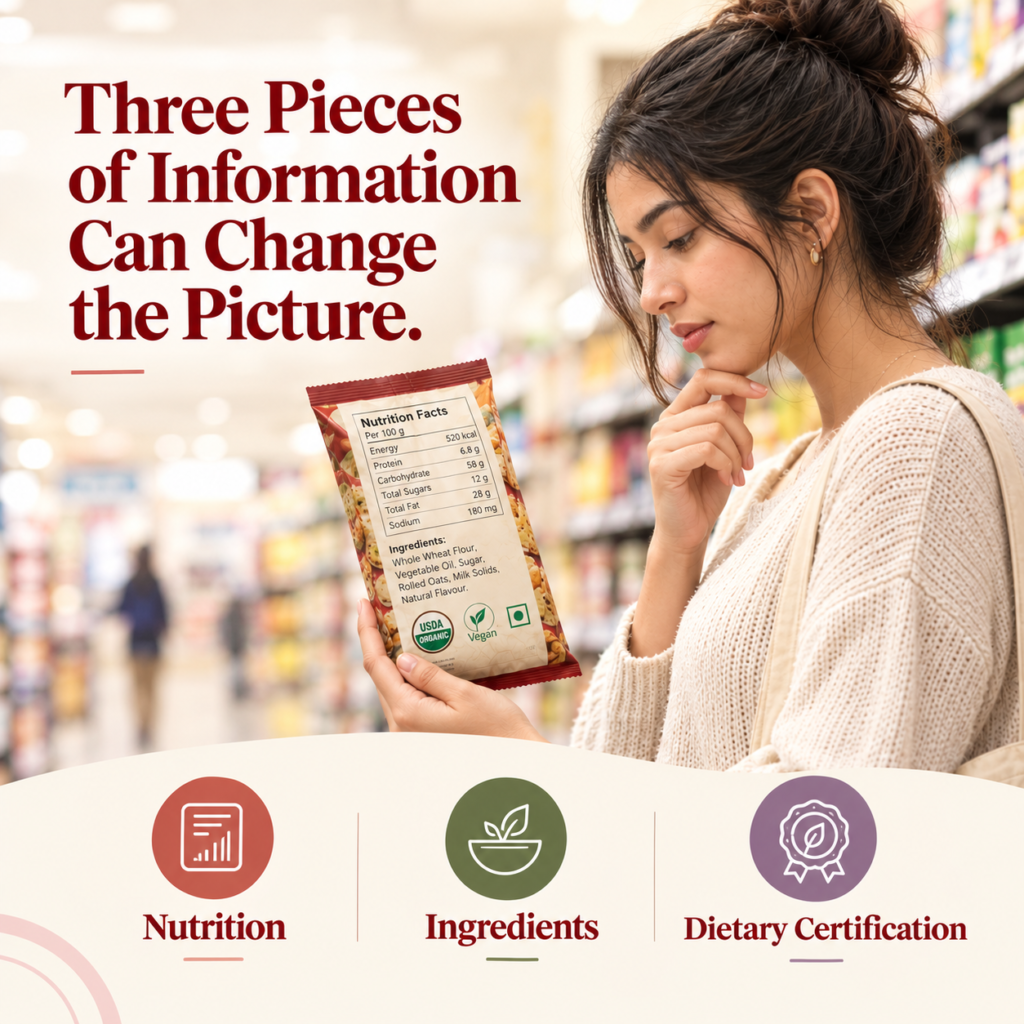
When people talk about reading food labels, the focus usually goes straight to calories, sugar, protein, fat, or sodium.
Those numbers certainly matter.
But a food label can tell you much more than its nutritional profile.
A useful way to look at a packaged product is through three key areas:
1. Start With the Ingredients
The ingredient list tells you what has gone into the product.
It can help you answer simple but important questions:
- What ingredients are present?
- Is there anything you prefer to avoid?
- Does the product contain ingredients that don’t fit your dietary preferences?
2. Look at the Nutrition Information
Nutrition Information gives you a better idea of the nutritional composition of the product.
Depending on the product, you may find information about calories, carbohydrates, protein, fat, sugar, sodium, and other nutrients.
This helps you understand the nutritional side of your decision rather than relying only on what the packaging says.
3. Check the Dietary Certification
Certifications add another layer to the picture.
If you follow a particular dietary practice or have a specific preference, a relevant certification can help you determine whether the product aligns with what you’re looking for.
Together, ingredients, Nutrition Information, and dietary certifications can give you a much more complete understanding of a packaged food product.
Don’t Let a Bold Claim Make the Choice for You
Food packaging is designed to get your attention.
Words like “Healthy,” “Natural,” “Premium,” “Light,” and “Wholesome” are easy to notice, especially when you’re shopping quickly.
But a prominent claim doesn’t necessarily tell you everything you need to know.
For instance, a product can be marketed as “healthy” and still not meet the particular dietary criteria you’re looking for.
That doesn’t mean the product is unhealthy or unsuitable for everyone. It simply means that one word on the front of the pack may not give you the complete picture.
The same principle applies to certifications. If Eat What Feels Right means choosing food that fits your own preferences, then understanding the certification behind a product can be just as important as noticing the claim on its packaging.
Rather than assuming what a symbol means, take a moment to understand it.
The more you understand the label, the easier it becomes to Eat What Feels Right without relying on assumptions.
Turn Food Labels Into a Simple Habit
Making better food choices doesn’t mean spending several minutes analysing every product you pick up.
A simple habit can make a difference.
Start With What Matters to You
Before choosing a product, identify your priority.
It could be:
- A particular certification
- Certain ingredients
- Nutrition
- Allergens
- A dietary preference
- Your overall lifestyle
Once you know what matters, it becomes easier to focus on the information that’s actually useful to you.
Turn the Pack Around
The front of a package is designed to communicate quickly.
The back often tells you much more.
Take a moment to look at the ingredients, Nutrition Information, and any relevant certification.
Know What the Certification Represents
Don’t assume that every certification mark means the same thing.
If a certification influences your purchase, understand the standard behind it and what it actually tells you about the product.
Compare Before You Choose
Two products in the same category can look almost identical on the shelf but have different ingredients, nutritional profiles, or certifications.
A quick comparison can help you choose based on your priorities, rather than simply choosing the most attractive packet.
Keep Awareness Simple
The purpose of reading labels isn’t to make eating stressful.
You don’t need to get every decision perfect.
The goal is to have better information available when you need it—and use that information to make choices that work for you.
Where Poorna Satya Fits Into the Picture
Choosing food today isn’t simply about finding something to eat. With so many products, claims, labels, and certifications around us, understanding what we’re buying has become just as important.
Poorna Satya is built around a simple idea: Know What You Eat.
It brings together information around ingredients, Nutrition Information, and dietary certifications, helping consumers look at food through the lens of their own dietary preferences and lifestyle.
Whether you’re looking for Sattvik, Jain, Halal, Kosher, Vegan, Organic, Gluten-Free, or another dietary preference, having the right information can make everyday choices easier to understand. Eat What Feels Right is about having that clarity — knowing what a product contains, what its certification means, and whether it fits the way you choose your food.
Because sometimes the question isn’t:
“Is this food healthy?”
It’s:
“Does this food fit the way I choose to eat?”
And that answer starts with understanding what’s in the product and what its certification actually means.
Food certification indicates that a product, process, or facility meets specific requirements established by a particular certification system or standard. The exact requirements depend on the certification.
Before You Bite, Know What You’re Choosing
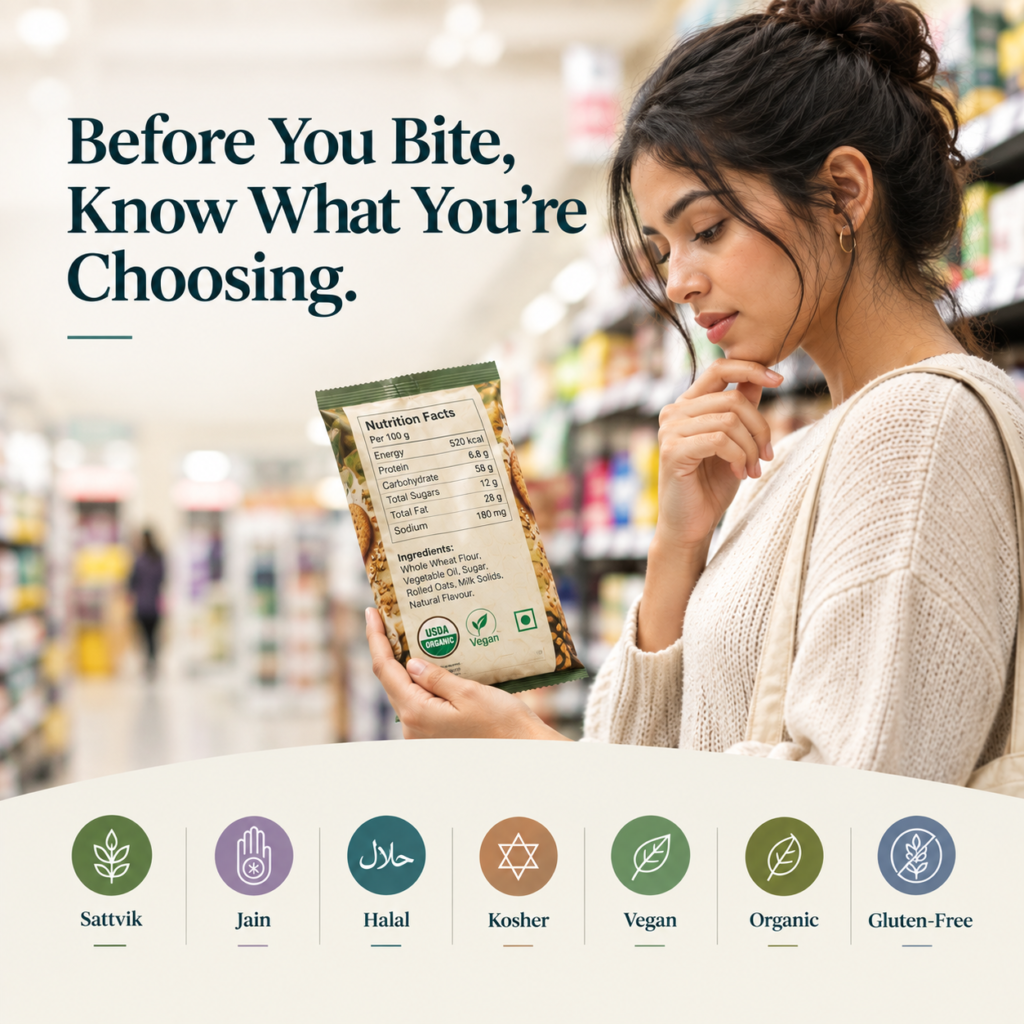
Food is personal.
The right choice isn’t always the product with the biggest health claim, the most attractive packaging, or the trendiest label.
Sometimes, it’s simply the product that fits your preferences and the way you choose to eat. That’s what Eat What Feels Right is really about — having the information to understand your options and choose what works for you.
That’s why food transparency matters.
When you understand the ingredients, Nutrition Information, and relevant dietary certifications, you can make more informed decisions without having to rely entirely on packaging claims or assumptions.
So the next time you pick up a packet, take a second look.
Read the label. Understand the certification. Eat What Feels Right and choose what fits you.
Because before you bite, it’s worth knowing what you’re choosing.
for more much content dofollow :https://blog.poornasatya.com/
