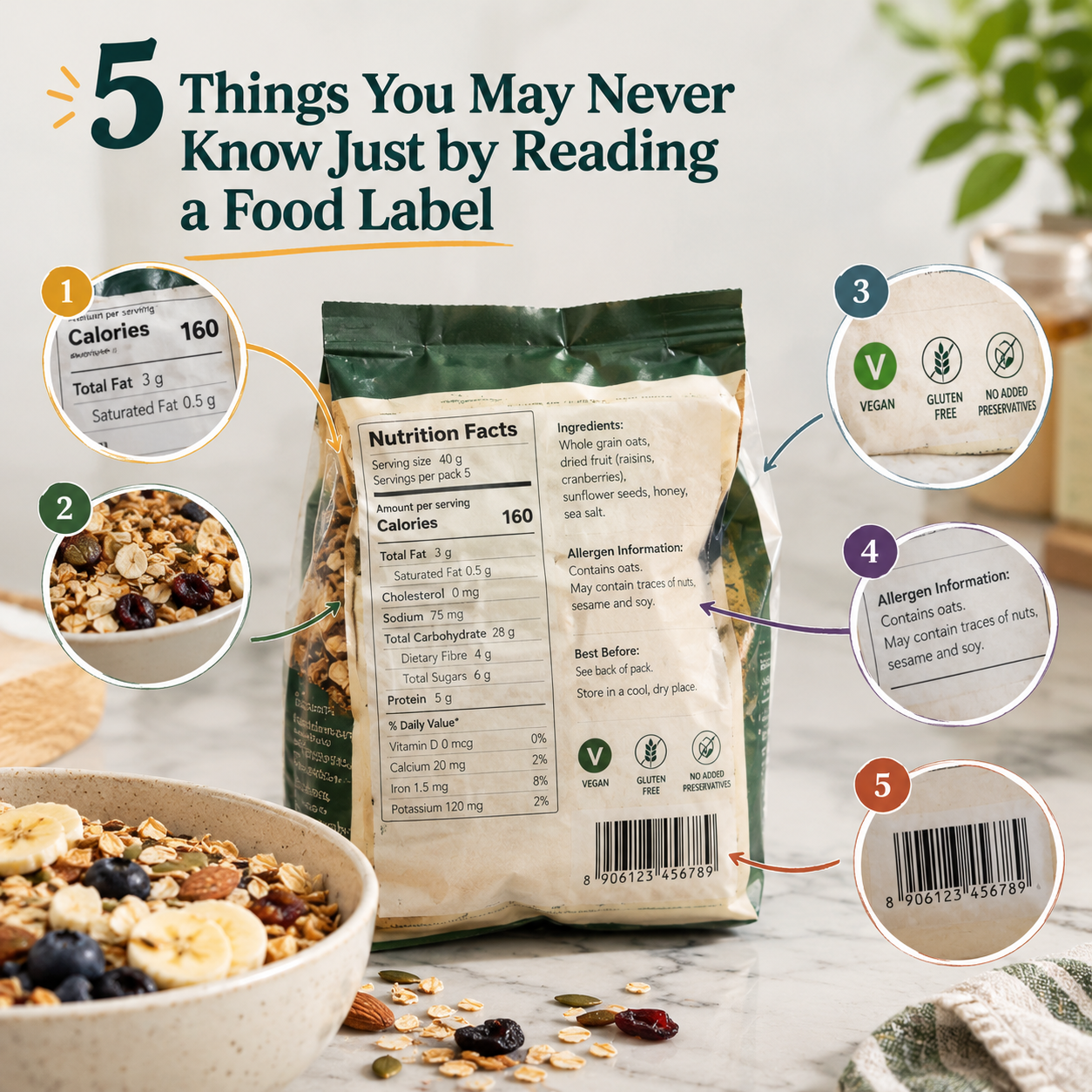
Introduction: There’s More to Your Food Than What’s on the Packet
Think about the last time you bought a packet of chips, biscuits or breakfast cereal. You probably checked the price, glanced at the expiry date and maybe turned the packet around to look at the ingredients. If something caught your attention on the front, you might have checked that too.
That’s how most of us shop. We look at the information available and make a choice. But have you ever stopped to think about what a food label doesn’t tell you?
A food label can tell you which ingredients are used in a product, provide its nutritional details and give you important information about the manufacturer and storage. Yet, there are still questions it may not answer. Where did the ingredients come from? What exactly does that claim on the front mean? And if you follow a particular diet, can you easily find the certification information you’re looking for?
These details often go unnoticed because we tend to focus on what’s most visible. Understanding a food label means looking beyond the obvious and exploring the information that matters to you. So, let’s look at five things worth knowing when you buy packaged food and what a food label may not reveal at first glance.
1. Ingredients and Nutrition: Knowing What’s Inside Is Just the Beginning
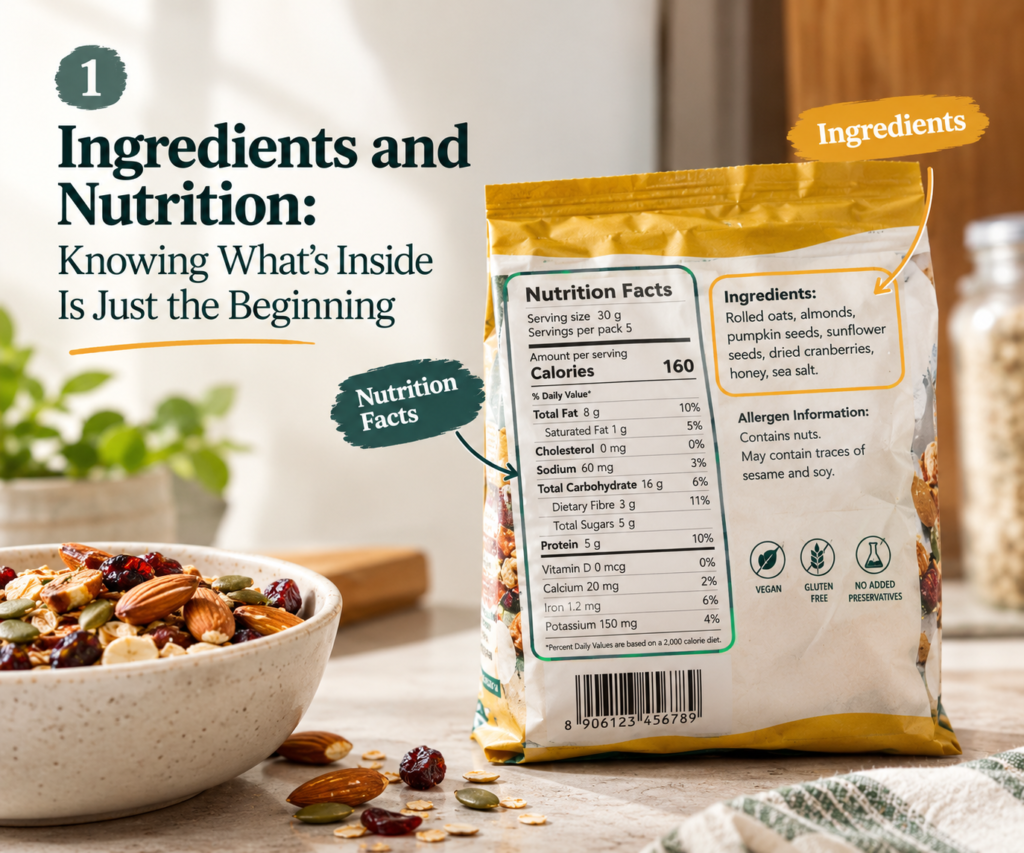
The ingredients list and Nutrition Information panel are usually the first places to look when you want to understand a product’s food label.
The ingredients list tells you what’s used to make the food, while the nutrition panel gives you details such as calories, sugar, protein, fat and sodium. Together, they help you understand what’s in the packet and what the product offers nutritionally. Reading a food label carefully can help you compare these details across different products.
But these details don’t tell you everything.
For example, the ingredients list on a packet of biscuits may mention wheat flour, sugar and edible oil. It tells you what’s in the biscuits, but it may not tell you where the wheat was grown or where the oil came from. This is one reason why a food label may not answer every question you have about a product.
Similarly, seeing “high protein” on a snack packet tells you what the brand wants to highlight, but you’ll still need to check the nutrition panel to understand the product more fully.
The point isn’t to read every food label perfectly. It’s to know that one piece of information rarely tells the whole story.
2. Dietary Certifications: A Small Detail That Can Matter a Lot
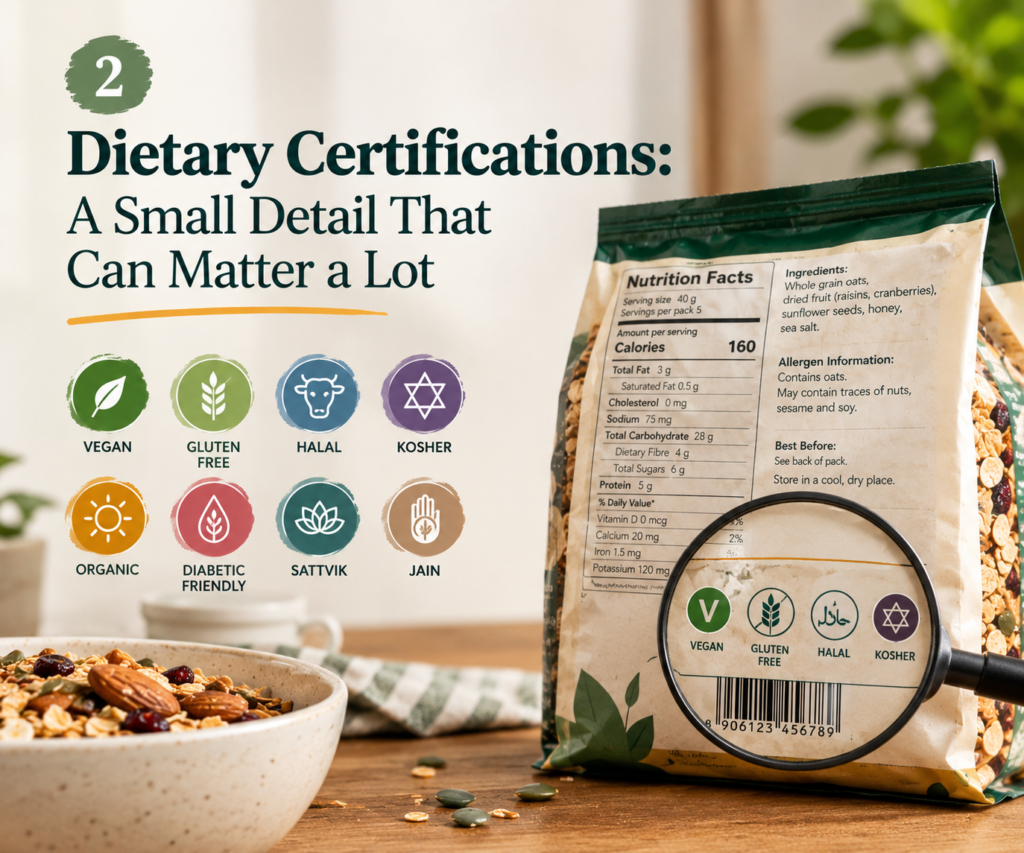
Here’s something many shoppers may not think about until they actually need it: dietary certification information on a food label.
Imagine you’re shopping for a friend who follows a vegan diet, or you’re looking for a product with a Halal or Kosher certification. You pick up a packet, check the ingredients and look for the relevant symbol. Sometimes, you may find what you’re looking for. Other times, the packaging may not provide the certification information you need, even after checking the food label carefully.
That’s because dietary certification marks are not displayed on every packaged food product.
Certifications such as Halal, Kosher, Vegan, Organic, Gluten-Free and Sattvik can be relevant to different dietary preferences and requirements. But each represents something specific, and one certification doesn’t automatically answer every question about a product. A food label may provide useful details, but it’s important to understand what each certification actually represents.
It’s also important not to jump to conclusions when a logo isn’t present. The absence of a certification mark doesn’t automatically mean that a product fails to meet a particular dietary requirement. It means you may need more information to establish whether it suits your needs.
This is one area where finding relevant product information can make shopping easier. A food label becomes more useful when consumers can explore the different details that matter to them.
Poorna Satya brings ingredients, Nutrition Information and dietary certification information together in one scan, where available. So, instead of looking at just one part of the packet, consumers can explore these three aspects of a product in one place.
3. The Serving Size Surprise: Are You Reading the Numbers Correctly?
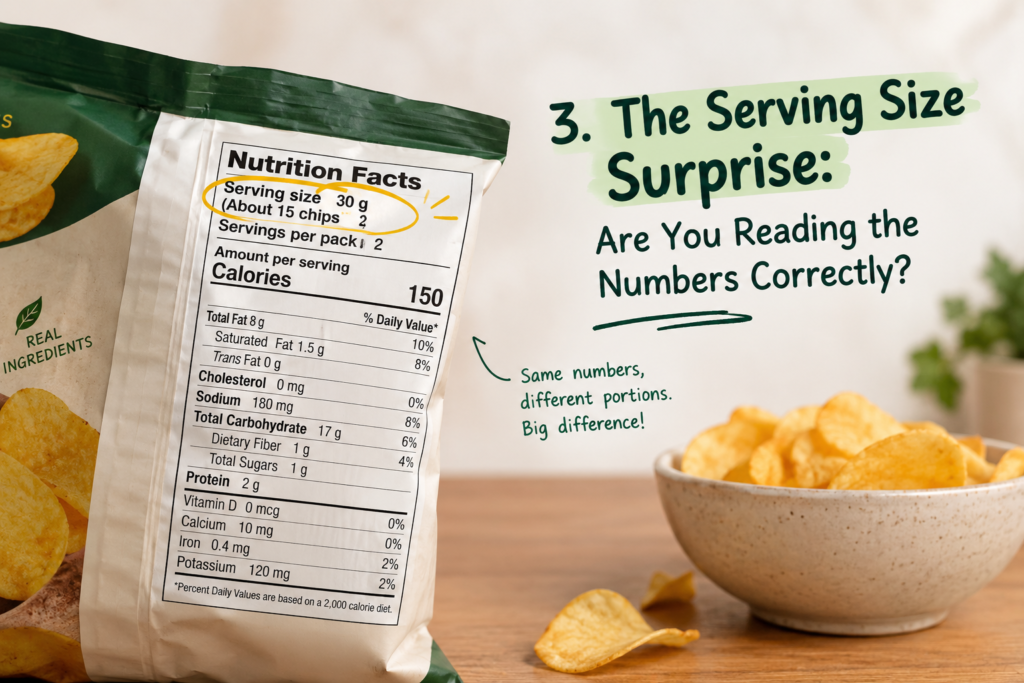
Have you ever picked up a packet, looked at the nutrition information on the food label and thought, “That doesn’t seem like much”? There might be one small detail you’ve missed: the serving size.
Nutrition information is often displayed per serving or per 100 g, depending on the product and its label. The serving size tells you the quantity the listed nutritional values refer to. But here’s where things can get confusing: the amount mentioned on the food label may be different from what you actually eat.
For example, imagine a packet of snacks contains two servings. If you finish the entire packet while watching your favourite show, you may consume twice the amount of calories, sugar or sodium listed for one serving. The numbers on the label haven’t changed; you’ve simply eaten more than the stated serving size.
This is why checking the serving size matters. It helps you understand the nutrition information in relation to how much you’re actually consuming, rather than judging a product by the numbers alone. Taking a closer look at the food label can help you make more meaningful comparisons between products.
The next time you pick up a packaged snack, take a moment to check whether the nutritional values are listed per serving or per 100 g. This simple habit can help you read a food label more carefully and compare similar products much more easily.
4. What Does That Claim on the Front Really Mean?
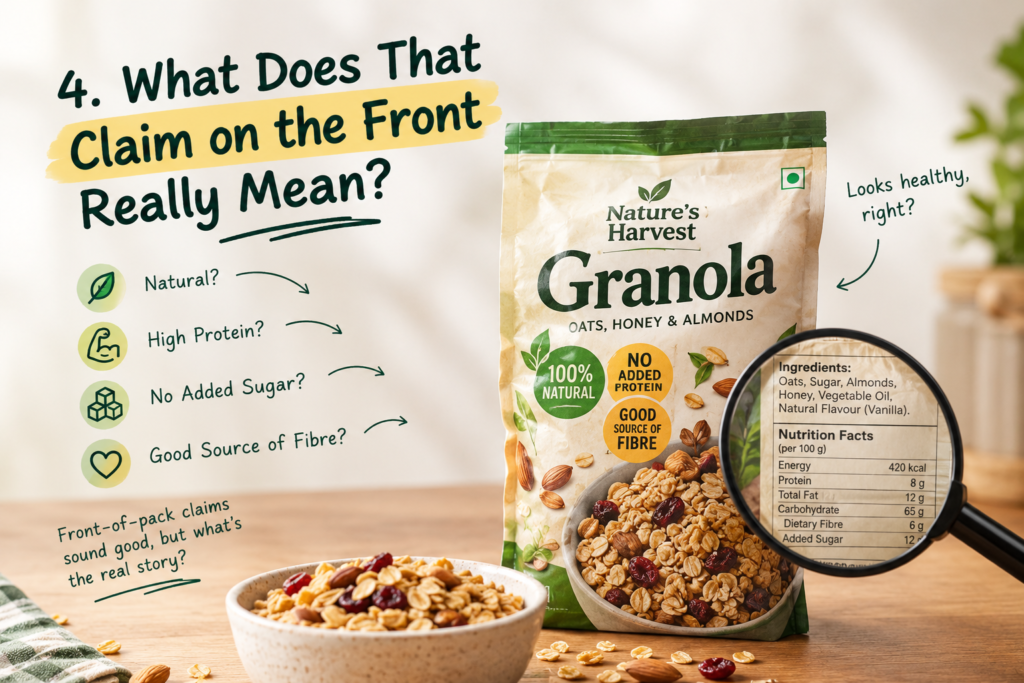
We’ve all seen food packets with phrases such as “natural,” “multigrain,” “high protein” or “no added sugar.” These words stand out, and it’s easy to let them influence our buying decisions.
But a claim usually highlights just one feature of a product.
Take “no added sugar,” for example. It doesn’t automatically mean the product contains no sugar at all. Likewise, “multigrain” tells you something about the grains used, but it doesn’t tell you the complete nutritional profile.
This is why turning the packet around can be useful. Check the ingredients, look at the Nutrition Information and consider the claim in the context of the rest of the product details.
You don’t need to assume that every claim is misleading. Just remember that a claim is a starting point for understanding a product, not the entire story.
5. What Does the FSSAI Licence Number Actually Tell You?
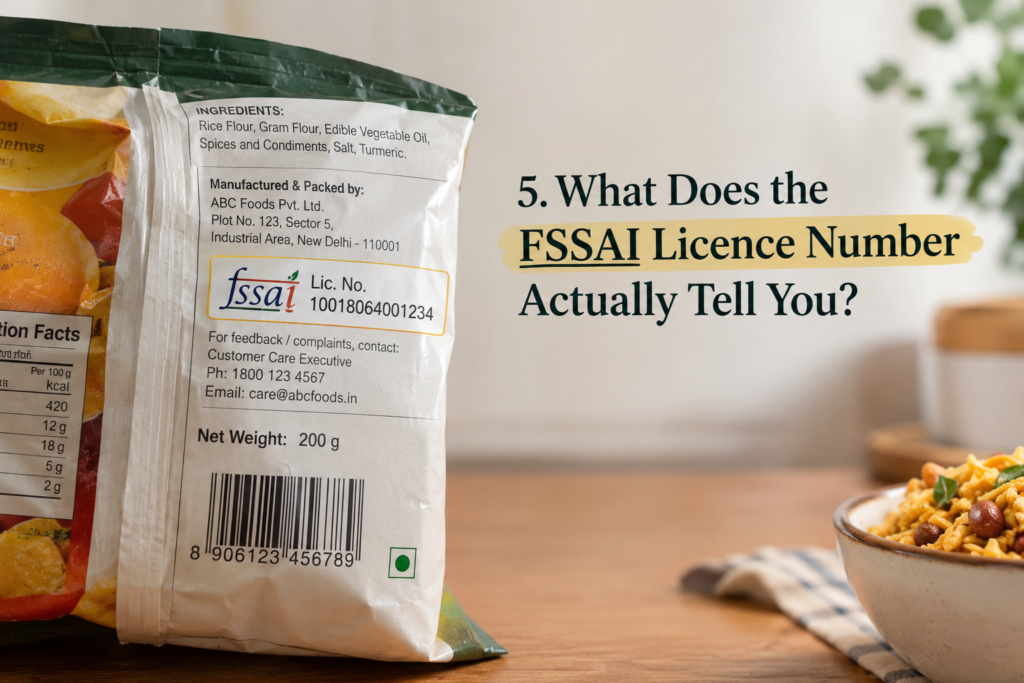
Have you noticed the FSSAI logo or licence number printed on packaged food but never really paid attention to it? You’re not alone. It’s one of those details that can easily go unnoticed when you’re more interested in the product’s price, flavour or expiry date.
FSSAI stands for the Food Safety and Standards Authority of India. Its logo and the associated licence or registration details help identify the food business responsible for the product under India’s food safety regulatory framework.
But what does this mean for you as a consumer? The licence number is a useful detail you can check if you want to learn more about the food business behind a packaged product. It is not, however, a guarantee that every nutritional claim, marketing statement or dietary certification associated with the product is automatically verified.
It’s also important to understand that an FSSAI licence and a dietary certification are not the same thing. For example, an FSSAI licence does not automatically establish that a product is Halal, Vegan, Kosher or Sattvik certified. These address different aspects of product information.
So, the next time you turn a packet around, don’t stop at the ingredients list or nutrition panel. Take a look at the FSSAI details, too. Understanding what different numbers and symbols mean can help you read food labels with greater clarity.
How Poorna Satya Makes Food Information Easier to Explore
Let’s be honest: most people don’t want to spend several minutes trying to understand every packet they pick up. Shopping should not feel like solving a complicated puzzle.
At the same time, people may want to know more than what’s written in large letters on the front.
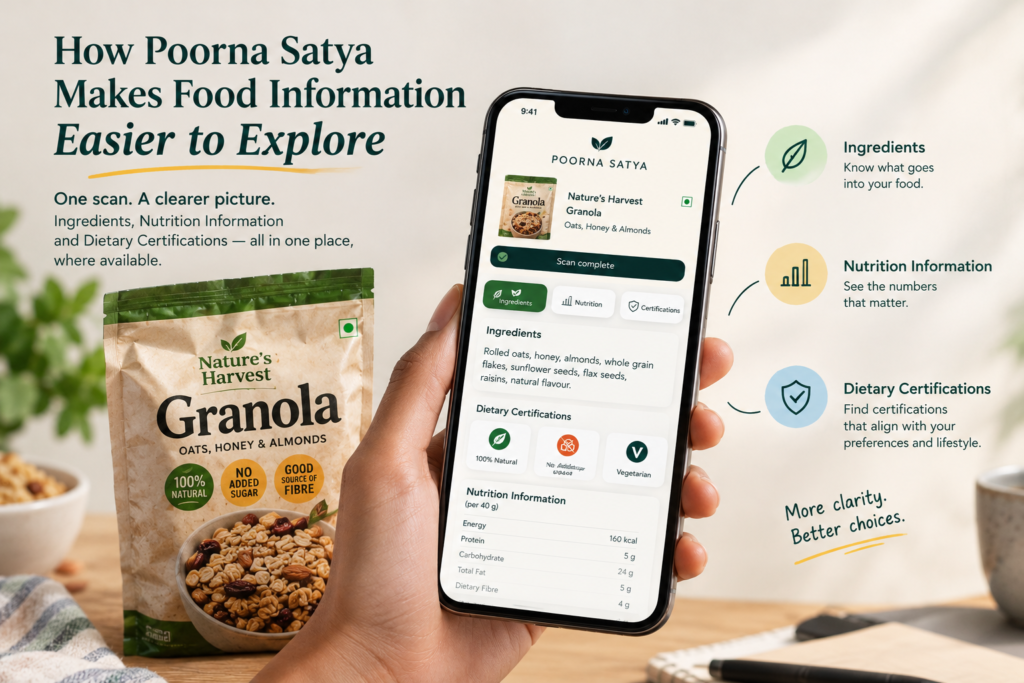
That’s where Poorna Satya comes in. With one scan, the platform brings together three important layers of packaged-food information:
- Ingredients: See the ingredients listed for the product.
- Nutrition Information: Explore its nutritional details instead of relying on a single claim.
- Dietary Certifications: Find relevant certification information, such as Halal, Kosher, Vegan or Sattvik, where available.
These details can be useful for people who want to compare products, understand what’s in their food or explore certification information relevant to their dietary preferences.
Poorna Satya doesn’t issue certifications or replace laboratory testing. Its purpose is to make relevant product information easier to access and understand.
Conclusion: Next Time, Look Beyond the Front of the Packet
A food label is a good place to start when you’re trying to understand what you’re buying. But it may not answer every question about a product, its ingredients, its manufacturing process or the certifications that matter to you.
You don’t need to become an expert in food labels overnight. Start with the basics, pay attention to the claims you see and look for additional information whenever you need it.
And when you want to explore ingredients, Nutrition Information and dietary certifications together, Poorna Satya makes that information easier to access in one scan, where available.
Because buying food isn’t just about choosing a packet that looks appealing. It’s also about understanding what’s behind it.
Poorna Satya – Know What You Eat.
For more content do follow :https://poornasatya.com/
